
When your car develops a warning light, unusual behavior, or an electronic fault, a car diagnostic test can reveal important information about what is happening inside the vehicle. Modern cars use computers, sensors, control units, and communication networks to monitor hundreds of functions while you drive.
A diagnostic test does more than simply tell you that something is wrong. Depending on the vehicle and the equipment being used, it can show stored fault codes, sensor readings, system status, module information, and other data that helps a technician understand where to investigate.
For drivers of BMW, Mercedes-Benz, Audi, Volkswagen, MINI, Porsche, and other European vehicles, understanding diagnostic results can make repair recommendations easier to follow and help prevent unnecessary parts replacement.
What Does a Car Diagnostic Test Show?
A car diagnostic test can show information collected by the vehicle’s electronic control systems. The exact information available depends on the vehicle, model year, control modules, and diagnostic equipment.
A professional scan may reveal:
- Stored fault codes
- Pending fault codes
- Warning-system information
- Sensor readings
- Live operating data
- System voltage
- Communication faults
- Control-module status
- Emissions-related information
- Transmission-related data
- Engine-management information
- ABS and stability-control faults
- Airbag system faults
- Climate-control system faults
- Body electronics information
The scan itself is only one part of the process. A technician must interpret the information and compare it with the vehicle’s symptoms and technical specifications.
This distinction is important because a diagnostic result does not always identify a single failed component.
What Is Stored in a Car’s Computer?
Modern vehicles contain several electronic control units, often called modules. These computers receive information from sensors and other components and use that information to control different vehicle functions.
Depending on the vehicle, separate modules may control areas such as:
- Engine operation
- Automatic transmission
- Braking systems
- Airbags
- Stability control
- Climate control
- Body electronics
- Lighting
- Steering
- Suspension
- Infotainment
- Driver-assistance systems
When a module detects an abnormal condition, it may record information that can later be retrieved with suitable diagnostic equipment.
This stored information gives a technician a starting point for investigation.
What Are Diagnostic Trouble Codes?
One of the most familiar results from a diagnostic scan is a Diagnostic Trouble Code, commonly called a DTC.
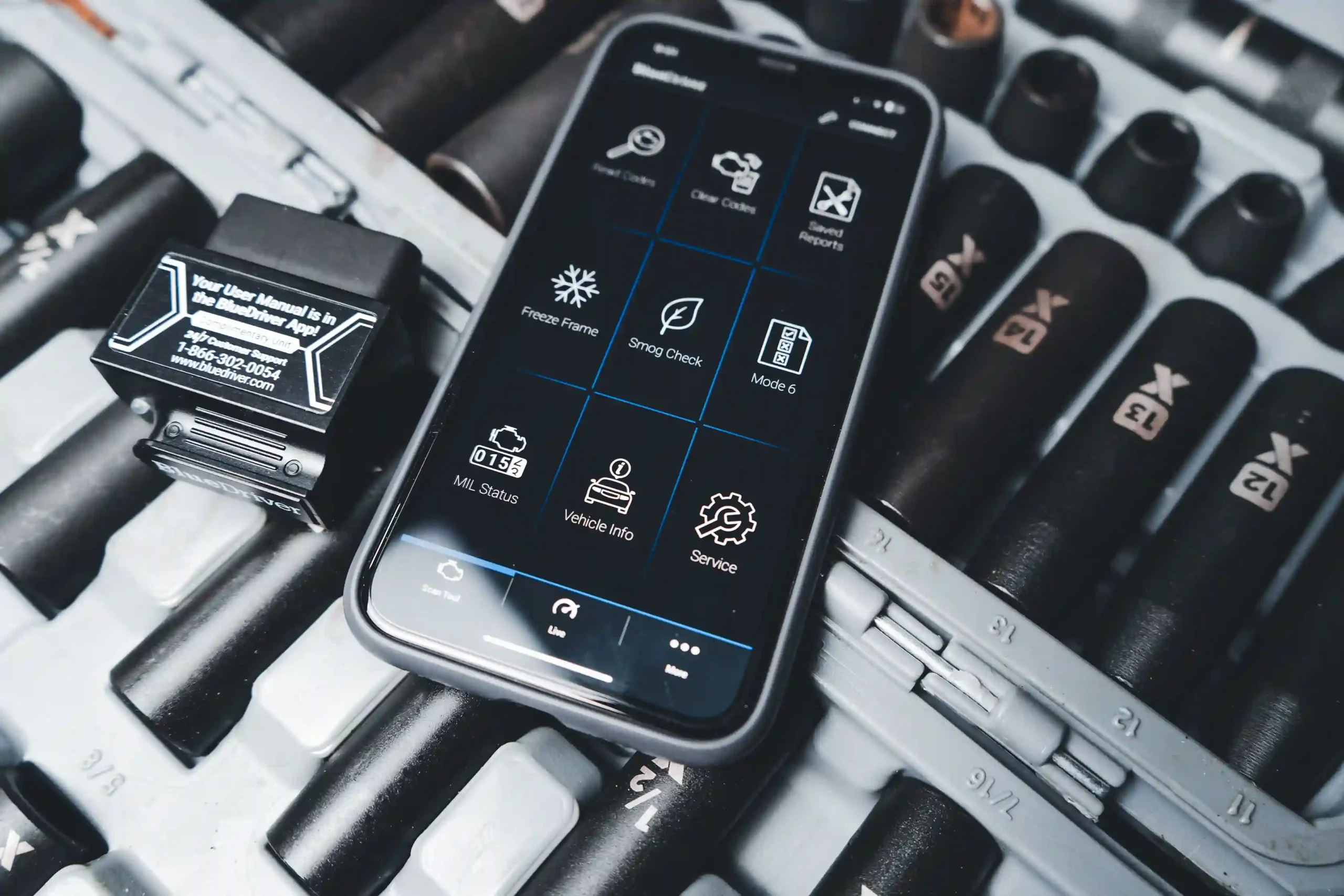
A DTC is a coded message associated with a condition detected by a vehicle system. The code can point toward a particular circuit, sensor, system, communication problem, or operating condition.
For example, a code may indicate that a particular sensor signal is outside the expected range.
However, the code does not automatically prove that the sensor itself has failed.
The underlying problem could involve:
- Damaged wiring
- A poor electrical connection
- Low system voltage
- Corrosion
- A mechanical issue
- A vacuum problem
- A failed component elsewhere
- Communication between modules
- A software-related issue
This is why experienced technicians use diagnostic codes as evidence rather than treating them as automatic instructions to replace a part.
What Are Stored Codes?
Stored codes are faults that the vehicle’s control system has recorded.
A stored code can remain in memory even when the symptom is not happening at the exact moment the vehicle is being inspected.
For example, a vehicle may experience an intermittent sensor problem during driving. The problem could disappear temporarily, but the corresponding information may remain stored inside the relevant control module.
A technician can retrieve the code and then investigate whether the condition is still present.
Stored information can therefore provide valuable clues about problems that are difficult to reproduce.
What Are Pending Codes?
Some vehicles can record faults as pending before they become fully confirmed.
A pending code may indicate that the system detected an abnormal condition but has not yet met all the criteria necessary to classify it as a confirmed fault.
This can be particularly useful when a problem is developing or occurs only occasionally.
A technician may compare pending information with confirmed codes, freeze-frame information, live data, and the driver’s description of the symptom.
Pending information should not automatically be treated as proof that a component needs replacement.
Instead, it can help identify an area that deserves further investigation.
What Is Freeze-Frame Data?
Another useful piece of information that may be available during diagnostics is freeze-frame data.
Freeze-frame information can capture operating conditions around the time a particular fault was recorded.
Depending on the vehicle, this may include information such as:
- Engine speed
- Vehicle speed
- Engine temperature
- Throttle position
- Fuel-related information
- System voltage
- Load conditions
- Other sensor values
Imagine a vehicle records a fault while accelerating. Freeze-frame information may help show what the vehicle was doing when the fault occurred.
This can give a technician more context than the fault code alone.
What Does Live Data Show?
Live data is one of the most useful features of professional diagnostic equipment.
Unlike a stored code, which represents a recorded event, live data allows a technician to observe information from the vehicle while systems are operating.
Depending on the vehicle, live data can include readings from:
- Oxygen sensors
- Coolant temperature sensors
- Intake-air sensors
- Throttle position
- Engine speed
- Fuel-system parameters
- Airflow measurements
- Battery or charging voltage
- Transmission information
- Pressure sensors
- Accelerator position
- Wheel-speed sensors
Live readings can be compared against expected behavior.
For example, if a temperature sensor reports an unrealistic value compared with the actual engine temperature, the technician has a useful clue that further testing may be required.
Can a Diagnostic Test Show Sensor Problems?
Yes, diagnostic equipment can help identify conditions associated with sensor problems.
Modern vehicles rely on many sensors to measure temperature, pressure, speed, position, airflow, oxygen content, and other operating conditions.
A sensor-related fault may appear as a diagnostic code or an unusual live-data reading.
However, replacing the sensor immediately may not always be the correct solution.
The technician may need to check:
- Whether the sensor receives the correct power supply.
- Whether its ground connection is good.
- Whether the signal reaches the control module.
- Whether the wiring is damaged.
- Whether the connector has corrosion.
- Whether the mechanical system is creating the unusual reading.
A diagnostic test helps narrow the investigation, but additional testing confirms the actual cause.
Can a Diagnostic Test Show Engine Problems?
Engine-management diagnostics can provide valuable information about electronic engine systems.
A scan may help identify faults involving ignition, fuel management, emissions components, sensors, throttle control, air measurement, and other electronically monitored systems.
For example, a vehicle experiencing rough running may produce information that directs attention toward a particular engine-management system.
But not every mechanical engine problem creates a clear electronic code.
A compression problem, mechanical wear, vacuum leak, or other physical issue may require separate inspection and testing.
This is why a complete diagnostic process can involve both electronic information and traditional mechanical testing.
Can a Diagnostic Test Show Transmission Problems?
Many modern transmissions contain electronic control systems that communicate with the vehicle’s other modules.
A diagnostic scan may therefore reveal transmission-related information such as:
- Transmission fault codes
- Solenoid-related faults
- Sensor information
- Communication problems
- Temperature-related information
- Gear-selection information
- Control-module faults
This information can help a technician determine where further testing should begin.
However, a transmission code does not automatically mean the transmission needs to be rebuilt or replaced.
A transmission problem can originate from an electrical connection, sensor, solenoid, control module, fluid-related condition, mechanical component, or communication issue.
The diagnostic result needs to be interpreted together with the vehicle’s symptoms and additional testing.
Can Diagnostics Find Electrical Problems?
Electrical faults can be some of the most difficult problems to identify because the vehicle contains extensive wiring and numerous electronic modules.
A diagnostic scan can reveal communication faults, module errors, sensor-related issues, and other electronically monitored conditions.
However, electrical diagnosis often requires more than connecting a scanner.
A technician may need to use:
- A digital multimeter
- Wiring diagrams
- Voltage testing
- Resistance testing
- Current measurements
- Connector inspection
- Circuit testing
- Module communication testing
A vehicle may show several warning messages because one electrical problem affects multiple systems.
Finding the original cause is therefore more important than simply clearing the warning messages.
What Can ABS Diagnostics Show?
The anti-lock braking system uses wheel-speed sensors and electronic control components to monitor vehicle behavior.
A diagnostic scan may reveal information related to:
- Wheel-speed sensor faults
- ABS module faults
- Communication errors
- Sensor signal problems
- Stability-control issues
- Related warning-light conditions
If one wheel-speed sensor produces an abnormal signal, the system may store a fault.
The technician may then inspect the sensor, wiring, connector, wheel bearing area, and other related components before determining the appropriate repair.
What Can Airbag Diagnostics Show?
Airbag systems contain multiple sensors, control units, and safety-related components.
A diagnostic scan can help identify faults associated with the supplemental restraint system.
Depending on the vehicle, diagnostic information may relate to:
- Airbag modules
- Crash sensors
- Seat-related systems
- Pretensioners
- Wiring circuits
- Communication faults
Because airbag systems are safety-critical, warning lights should not be ignored.
A diagnostic scan can help identify where investigation should begin, but repairs should be handled using the appropriate procedures and equipment for the vehicle.
Can a Diagnostic Test Show Battery or Charging Problems?
Electrical voltage can affect many vehicle systems.
A weak battery, charging-system problem, poor connection, or unstable voltage can sometimes create unusual electronic behavior.
Diagnostic equipment may show voltage-related information or communication faults that help point toward an electrical supply issue.
However, battery condition should also be tested directly.
A technician may need to check:
- Battery voltage
- Starting performance
- Charging voltage
- Connections
- Ground points
- Alternator operation
- Electrical load behavior
This is particularly important when multiple unrelated warning lights appear at the same time.
What Does a Diagnostic Test Show on European Cars?
European vehicles often contain multiple sophisticated control modules and electronically managed systems.
Jankowski Import Auto specializes in German and European vehicles including Mercedes-Benz, BMW, Audi, Volkswagen, MINI, and Porsche, with advanced diagnostic equipment and OEM-quality parts.
On these vehicles, a professional diagnostic process may access information from multiple modules rather than scanning only the engine computer.
Depending on the vehicle, technicians may investigate:
- Engine control
- Transmission control
- ABS
- Airbag systems
- Body electronics
- Climate systems
- Suspension electronics
- Steering systems
- Communication networks
- Driver-assistance systems
This broader access can be particularly useful when several symptoms appear together.
What Does a BMW Diagnostic Test Show?
BMW vehicles use numerous electronic systems that communicate with each other.
A diagnostic test may reveal information from engine-management modules, transmission systems, body electronics, braking systems, and other control units.
Depending on the fault, the technician may review stored events, current values, system status, and communication information.
For example, if a BMW displays several electronic warnings simultaneously, scanning multiple modules can help determine whether the warnings are independent problems or connected to one underlying issue.
The diagnostic result should then be verified with additional testing.
What Does a Mercedes-Benz Diagnostic Test Show?
Mercedes-Benz vehicles also use multiple electronic control units.
A diagnostic test may provide information about engine operation, transmission electronics, braking systems, restraint systems, body controls, climate systems, and other modules.
A professional technician can use this information to identify abnormal conditions and determine which areas require physical inspection.
If a Mercedes displays a warning message but continues to drive normally, scanning the relevant systems can still provide useful information before the issue becomes more serious.
What Does an Audi Diagnostic Test Show?
Audi vehicles combine electronic engine management with numerous comfort, safety, and communication systems.
A diagnostic scan can help reveal faults within these systems and may provide additional operating information through live data.
For example, a drivability complaint could involve an electronic sensor, an actuator, wiring, or a mechanical condition.
The scan helps establish a direction for testing rather than automatically identifying the replacement part.
What Does a Volkswagen Diagnostic Test Show?
Volkswagen vehicles also use electronic control modules for engine management, transmission functions, braking, safety systems, and other vehicle features.

A professional diagnostic process may reveal stored faults, module communication problems, sensor-related information, and other system data.
When several warning lights appear together, scanning the relevant modules can help establish whether the vehicle has one central issue or several separate faults.
Does a Diagnostic Scanner Show Every Problem?
No.
This is one of the most important things drivers should understand.
A scanner cannot automatically detect every mechanical, electrical, or physical problem.
A diagnostic system primarily reports information available through electronically monitored systems.
Problems such as:
- Mechanical wear
- Physical damage
- Certain fluid leaks
- Some vacuum leaks
- Internal engine damage
- Suspension wear
- Tire problems
- Brake wear
may require physical inspection or other testing.
This is why professional diagnosis combines electronic scanning with visual inspection, measurements, testing, and symptom analysis.
Can a Diagnostic Test Tell You Which Part to Replace?
Not always.
A diagnostic result may identify a circuit, system, or condition without proving which individual component has failed.
Consider a sensor circuit fault.
The actual cause could be:
- The sensor
- Wiring
- Connector damage
- Power supply
- Ground connection
- Control-module problem
- Mechanical condition affecting the sensor reading
Replacing the first component associated with a code can therefore produce an unnecessary repair.
A careful technician confirms the fault before recommending parts.
Why Diagnostic Results Should Be Explained
Diagnostic information can be confusing for drivers because scan tools may display codes, numbers, abbreviations, and technical descriptions.
A professional repair shop should explain:
- What the code means
- Which system reported it
- Whether the fault is current or historical
- What symptoms relate to the finding
- What additional testing is needed
- What repair is being recommended
- Why that repair is necessary
Clear communication allows the vehicle owner to make a more informed decision.
What Happens After a Diagnostic Scan?
The next step depends on what the scan reveals.
A typical process may look like this:
Step 1: Driver Describes the Symptoms
The technician first needs to understand what the driver has noticed.
Details such as when the problem occurs, whether it happens during acceleration, whether the vehicle is cold or warm, and whether warning lights appear can be extremely useful.
Step 2: Vehicle Systems Are Scanned
The technician connects suitable diagnostic equipment and checks the relevant control modules.
Step 3: Results Are Interpreted
Stored codes, current information, module status, and other data are reviewed.
Step 4: Additional Testing Is Performed
If necessary, the technician checks wiring, sensors, mechanical components, voltage, pressure, or other systems.
Step 5: Root Cause Is Identified
The goal is to determine why the fault occurred rather than simply identifying the warning message.
Step 6: Repair Recommendation Is Made
Once the cause has been confirmed, the technician can explain the appropriate repair.
This process helps separate evidence-based repairs from guesswork.
Why Clearing Codes Is Not a Repair
Some drivers believe that if a warning light disappears after codes are cleared, the problem has been solved.
That is not necessarily true.
Clearing codes removes stored information from a control module. It does not automatically repair the condition that caused the code.
If the underlying fault remains, the warning may return.
In some cases, clearing codes can also remove useful information that a technician could have used during diagnosis.
For this reason, codes should generally be interpreted and documented before they are cleared.
When Should You Get a Diagnostic Test?
A diagnostic check can be useful whenever the vehicle develops a symptom that may involve an electronically monitored system.
Consider professional diagnostics when:
- A warning light appears
- The vehicle develops unusual drivability
- The engine behaves differently
- The transmission changes behavior
- Several warning messages appear
- Electrical functions become unreliable
- The vehicle occasionally fails to start
- Performance suddenly changes
- A problem appears and disappears
- An electronic system stops working correctly
You should pay particular attention to warning lights that remain illuminated or return repeatedly.
If the vehicle is overheating, losing control, producing dangerous symptoms, or showing a serious warning, stop driving when safe and seek professional assistance.
Why Professional Diagnostic Equipment Matters
Basic code readers can be useful for retrieving certain information, but professional equipment can provide deeper access depending on the vehicle.
Advanced diagnostic systems may communicate with multiple control modules and display information that a basic reader cannot access.
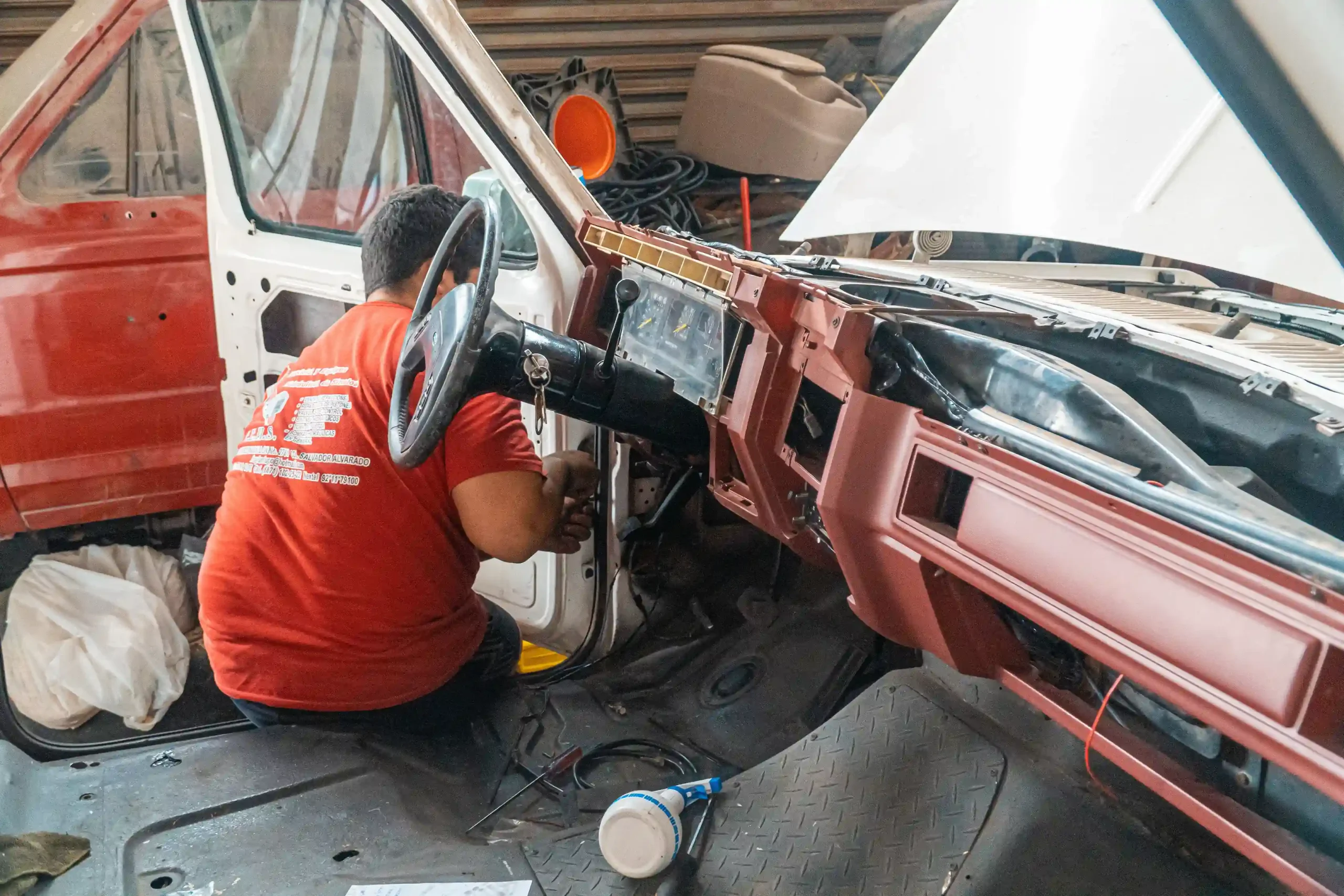
Jankowski Import Auto states that it uses state-of-the-art diagnostic equipment and focuses on complex issues involving European and luxury vehicles.
For vehicles with sophisticated electronics, the quality of the diagnostic process can influence how accurately a problem is identified.
The goal should always be to gather enough information to make a reliable repair decision.
How Drivers Can Help With Diagnostics
Drivers can make the diagnostic process easier by giving the technician useful information.
Before taking the vehicle to a repair shop, think about:
- When the symptom first appeared
- What the vehicle was doing at the time
- Whether the problem happens every time
- Whether temperature affects the symptom
- Whether the warning light stays on
- Whether another warning appeared at the same time
- Whether the vehicle recently received repairs
- Whether the battery was recently replaced
- Whether unusual noises or smells are present
Even small details can help narrow the investigation.
Final Thoughts
A car diagnostic test can reveal far more than a simple warning message. Depending on the vehicle and diagnostic equipment, it may show fault codes, pending conditions, freeze-frame information, live sensor data, module communication issues, system status, and other electronic information.
However, the information displayed by a scanner is not automatically a final diagnosis.
A code may identify a system that needs attention without proving which component has failed. Professional diagnosis combines scan results with vehicle symptoms, physical inspection, electrical testing, mechanical checks, and technical information.
For BMW, Mercedes-Benz, Audi, Volkswagen, MINI, Porsche, and other European vehicles, understanding what diagnostic equipment can access is particularly useful because these vehicles may contain numerous interconnected electronic systems.
The most valuable diagnostic result is not simply a code on a screen. It is a clear explanation of what the vehicle detected, why it happened, what testing confirmed the cause, and what should be done next.
When a warning light or unusual vehicle behavior appears, accurate diagnosis can help you make a better repair decision and avoid replacing parts based on assumptions.
Frequently Asked Questions
What does a car diagnostic test show?
A car diagnostic test can show stored and pending fault codes, sensor readings, module information, system status, and other electronically monitored vehicle data.
Does a car diagnostic test show the exact problem?
Not always. A diagnostic result may identify a system or condition that needs further investigation. Additional testing may be necessary to confirm the root cause.
Can a diagnostic test show engine problems?
It can reveal many electronically monitored engine-management faults, but mechanical problems may require additional inspection or testing.
Can a diagnostic test show transmission problems?
Yes. Modern transmissions have electronic control systems that can store faults and provide operating information. Additional testing may still be needed to identify the actual cause.
Can a diagnostic test find electrical problems?
A diagnostic scan can identify certain electrical and communication faults, but wiring, voltage, connectors, and components may require separate electrical testing.
Does clearing a diagnostic code fix the problem?
No. Clearing a code removes stored information but does not necessarily repair the condition that caused it.
Can a diagnostic scanner find every problem?
No. Some mechanical, physical, fluid, suspension, tire, and other problems require visual inspection or specialized testing.
What does live data mean on a car scanner?
Live data refers to information being reported by vehicle sensors and control systems while the vehicle is operating or being tested.
What is freeze-frame data?
Freeze-frame data records certain operating conditions around the time a fault was detected. It can help a technician understand what the vehicle was doing when the fault occurred.
Why are European cars sometimes more complicated to diagnose?
European vehicles can contain multiple electronic control modules and manufacturer-specific systems. Proper diagnosis may therefore require equipment capable of accessing those systems.
Should I replace a part when a diagnostic code points to it?
Not automatically. A code can identify a circuit or system without proving that the associated component has failed. Further testing can confirm the actual cause.
When should I get a car diagnostic test?
Consider diagnostic testing when warning lights appear, vehicle behavior changes, electronic systems malfunction, or an intermittent problem keeps returning.