
Modern Volkswagen vehicles rely on complex electrical systems to control everything from starting the engine and charging the battery to lighting, climate control, safety features, infotainment, sensors, and driver-assistance technology. When something goes wrong with the electrical system, the symptoms may not always be obvious.
Volkswagen electrical system check can help identify battery problems, alternator faults, wiring issues, warning lights, and other electrical problems before they become expensive repairs.
A Volkswagen may still start and drive normally while developing an electrical problem that becomes more serious over time. Flickering lights, slow starting, warning messages, dead batteries, malfunctioning windows, and intermittent dashboard problems can all indicate that your vehicle needs an electrical system check.
Understanding these warning signs can help you identify problems earlier and potentially prevent a small electrical issue from becoming a more expensive repair.
In this guide, we will cover the most common signs that your Volkswagen needs an electrical system inspection, what may be causing the problem, and when you should have your vehicle professionally diagnosed.
Why Is the Electrical System Important in a Volkswagen?
Your Volkswagen’s electrical system is responsible for much more than simply starting the engine.
It includes several interconnected components, such as:
- Battery
- Alternator
- Starter motor
- Fuses
- Relays
- Wiring
- Ground connections
- Electronic control modules
- Sensors
- Lighting systems
- Power windows
- Door locks
- Climate-control electronics
- Infotainment systems
- Safety systems
- Driver-assistance systems
Modern Volkswagens can contain numerous electronic control units that communicate with each other. A fault in one component can sometimes create symptoms in another part of the vehicle.
For example, a weak battery may cause several unrelated warning lights to appear on the dashboard. Similarly, a damaged ground connection can create intermittent electrical problems that are difficult to reproduce.
This is why proper diagnosis is important when multiple electrical symptoms appear at the same time.
1. Your Volkswagen Is Slow to Start
One of the most common signs of an electrical problem is a slow or weak engine start.
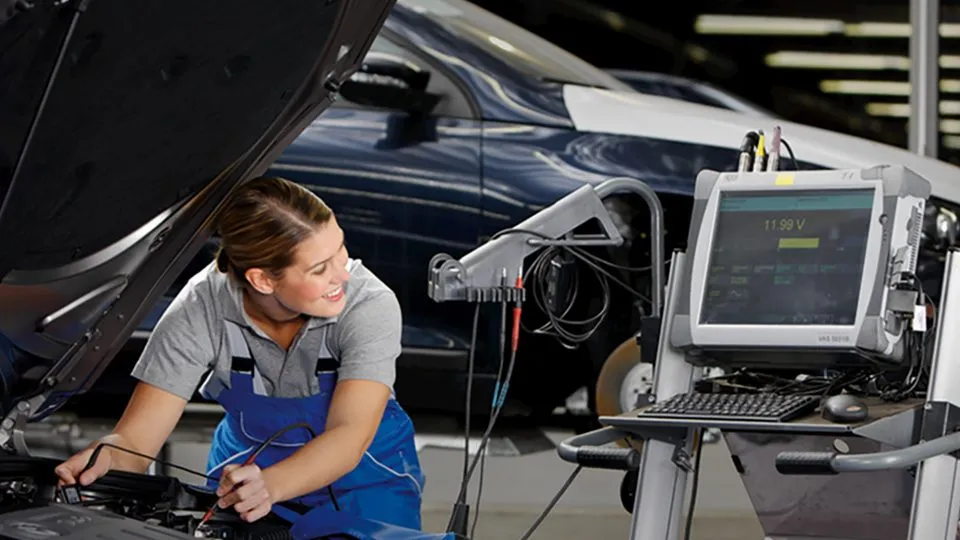
When you turn the key or press the start button, the starter motor requires significant electrical power from the battery. If the battery is weak, the starter may turn the engine more slowly than normal.
You may notice:
- Slow cranking
- Clicking when starting
- A delayed start
- Multiple attempts before the engine starts
- Dashboard lights becoming dim during startup
A weak battery is one possible cause, but it is not the only one.
A failing starter motor, poor battery connection, damaged ground cable, or charging-system problem can produce similar symptoms.
If your Volkswagen increasingly struggles to start, an electrical system check can determine whether the battery, starter, alternator, or wiring is responsible.
2. The Battery Keeps Going Dead
If you repeatedly find that your Volkswagen battery is dead after the vehicle has been parked, something may be wrong.
A battery can naturally lose some charge over time, particularly if it is old or the vehicle is not driven regularly. However, repeated battery failure can indicate an underlying problem.
Possible causes include:
- Aging battery
- Alternator problem
- Parasitic electrical drain
- Faulty module
- Interior light staying on
- Trunk or glovebox light remaining active
- Faulty aftermarket equipment
- Wiring problem
Replacing the battery without finding the reason it keeps losing power may only provide a temporary solution.
A technician can test the battery and charging system and check whether the vehicle is drawing excessive power while it is turned off.
3. Dashboard Warning Lights Appear
Modern Volkswagen vehicles use warning lights and messages to alert drivers when the vehicle detects a problem.
Volkswagen provides a detailed guide explaining what different dashboard warning lights mean and what action may be required; you can review the Volkswagen warning light guide for additional information.
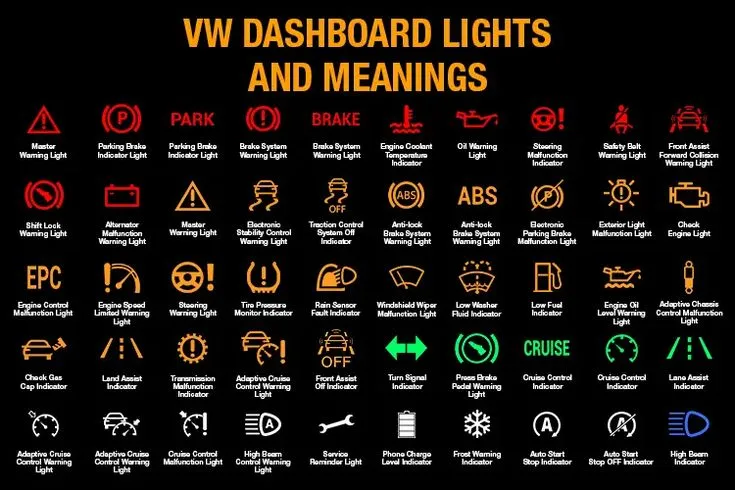
You may see warning indicators related to:
For more information about Volkswagen battery warnings and when an electrical system should be checked, see the Volkswagen guide to the 12-volt vehicle battery warning light
- Battery or charging system
- Engine management
- ABS
- Airbags
- Traction control
- Electronic stability control
- Steering
- Tire pressure
- Driver-assistance systems
Not every warning light means there is a serious electrical failure. However, multiple warning lights appearing simultaneously can sometimes indicate a voltage problem or communication issue.
For example, a weak battery can cause several electronic systems to behave abnormally.
If multiple warning lights appear unexpectedly, it is better to have the vehicle scanned and diagnosed rather than simply clearing the codes.
4. Your Headlights or Interior Lights Flicker
Flickering lights are another important electrical warning sign.
If your Volkswagen’s headlights, dashboard illumination, or interior lights become noticeably brighter and dimmer, the charging system may need to be inspected.
Possible causes include:
- Weak battery
- Alternator problems
- Voltage regulator issues
- Loose battery terminals
- Poor ground connection
- Wiring problems
Lighting problems should not be ignored because proper lighting is essential for safe driving, particularly at night.
A charging-system test can help determine whether the alternator is producing the appropriate electrical output.
5. The Alternator May Be Failing
The alternator helps maintain the battery’s charge while the engine is running and supplies electrical power to the vehicle’s systems.
If the battery warning light appears, Volkswagen recommends checking the vehicle’s charging system, as an alternator or charging-system fault may be involved; see the Volkswagen charging system warning light guide for more information.
If the alternator is not working properly, the battery may gradually lose charge even while you are driving.
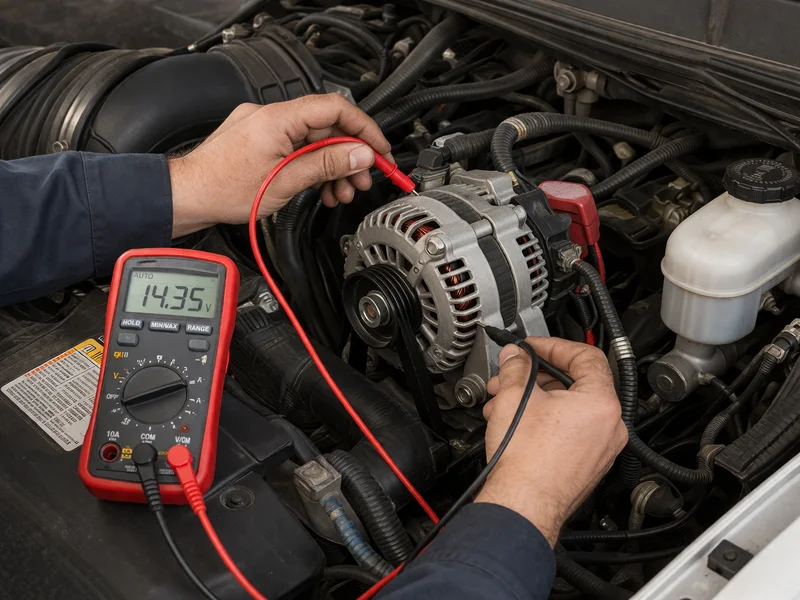
Signs of a possible charging-system problem include:
- Battery warning light
- Flickering headlights
- Weak electrical accessories
- Difficulty starting
- Repeated dead battery
- Electrical components behaving inconsistently
- Vehicle eventually stalling in severe cases
A failing alternator should be diagnosed promptly.
Simply replacing the battery may not solve the problem if the charging system is responsible for the battery repeatedly losing power.
6. Electrical Accessories Stop Working
A Volkswagen’s electrical accessories include many everyday features.
You might notice that:
- Power windows stop working
- Power mirrors do not adjust
- Seat controls stop responding
- Central locking becomes unreliable
- Interior lights do not work
- Heated seats stop operating
- The horn becomes intermittent
Sometimes one accessory failure can be traced to a fuse or individual component.
However, when several accessories begin failing around the same time, the problem may be related to a larger electrical or communication issue.
A professional inspection can help determine whether the problem is localized or affecting a broader part of the vehicle’s electrical network.
7. Power Windows Work Intermittently
Power-window problems are relatively common electrical complaints.
If a window works sometimes but not at other times, possible causes include:
- Window switch failure
- Window motor problem
- Wiring issue
- Door-module fault
- Poor electrical connection
- Fuse or control-system issue
If only one window is affected, the problem may be limited to that door.
If multiple windows stop working simultaneously, further electrical diagnosis may be necessary.
Avoid repeatedly operating a malfunctioning window because a mechanical or electrical fault can sometimes cause additional damage.
8. Your Central Locking System Is Acting Strange
Central locking is another system that depends on electrical and electronic components.
You may notice:
- Doors failing to lock
- Doors unlocking unexpectedly
- Key fob not working consistently
- One door refusing to respond
- Alarm activating unexpectedly
- Trunk release not working
The key fob battery is a simple possibility, but the problem could also involve the vehicle’s battery, door module, wiring, actuator, or communication system.
If replacing the key fob battery does not solve the issue, a vehicle-level diagnosis may be needed.
9. The Infotainment System Keeps Restarting
Modern Volkswagen vehicles depend heavily on electronic infotainment systems.
If the screen repeatedly freezes, turns off, restarts, or behaves unpredictably, the cause may be software or hardware related.
Possible causes can include:
- Low system voltage
- Software problems
- Infotainment module faults
- Wiring issues
- Battery problems
- Communication errors
Not every infotainment problem means the entire system needs replacement.
A technician should first determine whether the problem is caused by power supply, communication, software, or the module itself.
10. Your Air Conditioning or Climate Controls Behave Strangely
Electrical faults can also affect climate-control systems.
You may experience:
- Climate-control buttons not responding
- Blower speeds behaving incorrectly
- Temperature settings changing unexpectedly
- Air conditioning working intermittently
- Heater controls becoming unresponsive
- Climate display turning off
Because climate-control systems contain electronic controls, sensors, motors, and modules, the actual cause can vary.
An electrical diagnostic scan may be necessary if basic checks do not identify the issue.
11. Warning Messages Appear Randomly
One of the most frustrating electrical problems is an intermittent warning message.
A warning may appear while driving and then disappear after restarting the vehicle.
Examples can include messages relating to:
- Electronic stability control
- ABS
- Steering
- Airbags
- Parking sensors
- Driver-assistance systems
- Engine electronics
- Battery or charging
A warning disappearing does not necessarily mean the underlying problem has disappeared.
Modern vehicles can store diagnostic fault information even when a warning is no longer visible on the dashboard.
For this reason, intermittent warnings should still be investigated.
12. Your Volkswagen Has Strange Electrical Noises
Electrical faults can sometimes be accompanied by unusual sounds.
You might hear:
- Clicking
- Buzzing
- Relay sounds
- Electrical motors running after the vehicle is turned off
- Repeated actuator noises
Some noises are normal, particularly as modern vehicles perform electronic shutdown procedures.
However, if a component continues operating long after the vehicle has been parked, it could potentially drain the battery.
If you hear unusual electrical activity after shutting off your Volkswagen, an inspection may help identify the source.
Common Causes of Volkswagen Electrical Problems
There are several reasons a Volkswagen may develop electrical problems.
Weak or Aging Battery
A battery does not last forever. Extreme temperatures, short trips, repeated deep discharges, and age can reduce battery performance.
A weak battery can create multiple symptoms because modern electronic systems depend on stable voltage.
Alternator Failure
A failing alternator may prevent the battery from receiving sufficient charge while the engine is running.
Loose or Corroded Connections
Battery terminals and ground connections need clean and secure contact.
Corrosion or looseness can increase electrical resistance and cause intermittent problems.
Blown Fuses
Fuses protect electrical circuits from excessive current.
A blown fuse may cause a particular system to stop operating. If the same fuse repeatedly blows after replacement, the underlying circuit should be investigated rather than repeatedly installing another fuse.
Damaged Wiring
Wiring can become damaged through age, corrosion, heat, moisture, or physical wear.
A wiring problem can be particularly difficult to diagnose because the fault may occur only under certain conditions.
Faulty Control Modules
Modern Volkswagen vehicles use numerous electronic control modules.
A module that fails or loses communication can cause several related functions to stop working.
Why Volkswagen Electrical Problems Can Be Difficult to Diagnose
Electrical problems are not always visible.
A mechanic can easily see a damaged tire or leaking hose, but electrical faults may be hidden inside wiring, connectors, modules, or communication networks.
An intermittent problem can be even more difficult because the vehicle may appear normal when it reaches the repair shop.
For this reason, proper diagnosis may involve:
- Battery testing
- Charging-system testing
- Voltage testing
- Ground testing
- Fuse inspection
- Wiring inspection
- Diagnostic scanning
- Module communication testing
- Electrical current testing
The goal should be to identify the cause instead of replacing parts based only on symptoms.
Can a Weak Battery Cause Multiple Volkswagen Warning Lights?
Yes, low or unstable voltage can contribute to multiple electronic warnings.
When the vehicle’s voltage drops below the expected level, different control modules may record faults.
This can make the problem look much larger than it actually is.
However, it is important not to assume that every warning is caused by the battery.
A professional technician should test the battery and charging system and then determine whether the stored faults are related.
What Happens During a Volkswagen Electrical System Check?
A proper electrical inspection may begin with a visual assessment.
The technician can inspect:
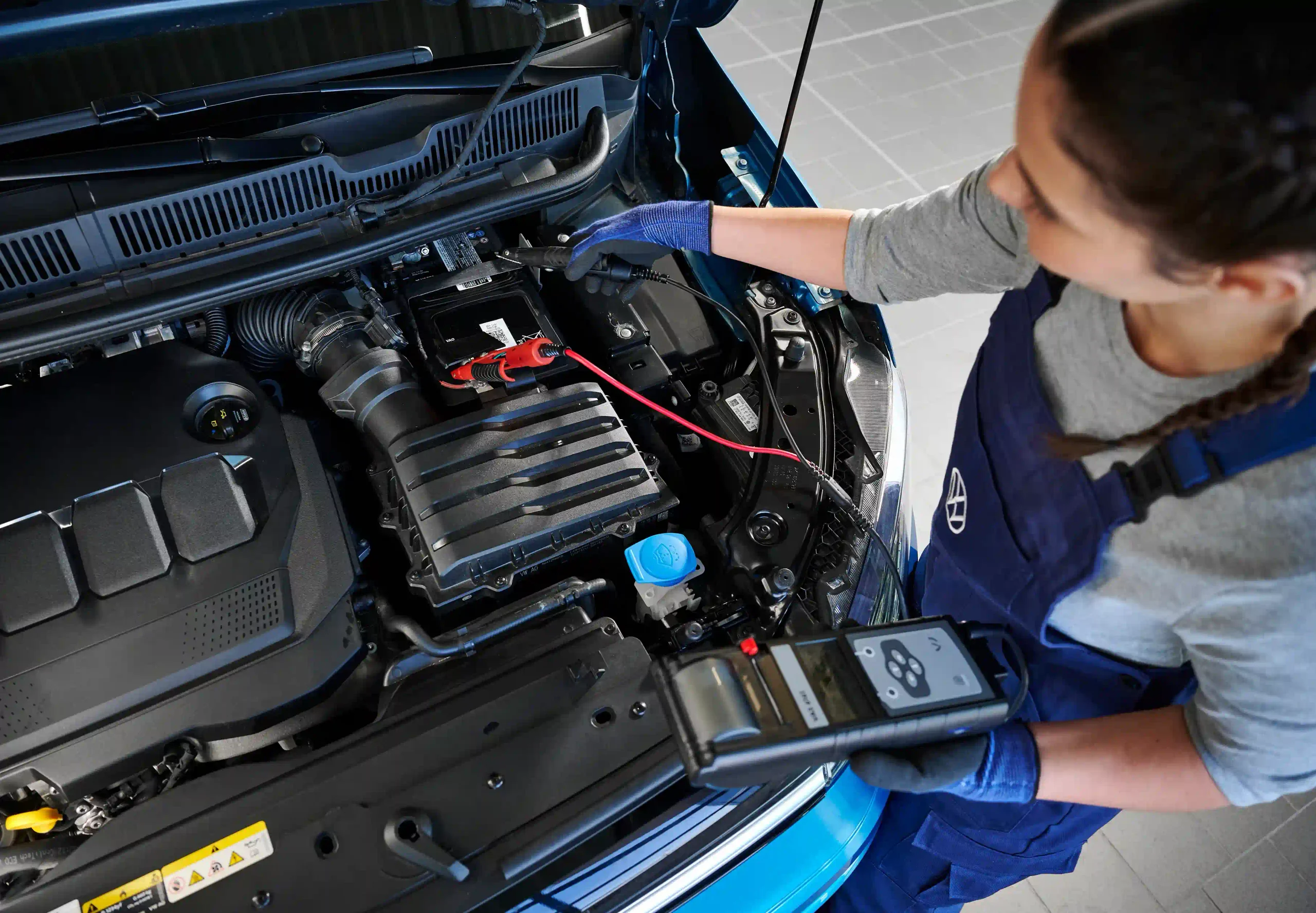
- Battery condition
- Battery terminals
- Ground connections
- Visible wiring
- Fuses
- Relays
- Alternator connections
- Warning lights
- Electrical accessories
The vehicle may then be connected to diagnostic equipment to check stored fault codes and communication between control modules.
Additional electrical testing may be performed depending on the symptoms.
For example, if the battery repeatedly dies overnight, a technician may investigate for a parasitic electrical draw.
If the headlights flicker while driving, the charging system may be tested.
The diagnostic process should be based on the specific symptoms rather than applying the same procedure to every Volkswagen.
When Should You Get Your Volkswagen Electrical System Checked?
You should consider an electrical inspection if you experience one or more of these symptoms:
- Slow engine cranking
- Repeated dead battery
- Battery warning light
- Flickering headlights
- Multiple dashboard warnings
- Intermittent power windows
- Central locking problems
- Infotainment restarting
- Climate-control electrical issues
- Unusual electrical noises
- Random warning messages
- Electrical accessories suddenly failing
If several symptoms occur at the same time, scheduling an inspection sooner rather than later is a good idea.
Can You Drive a Volkswagen With an Electrical Problem?
It depends on the type of electrical problem.
A minor issue with a nonessential accessory may not immediately prevent the vehicle from being driven.
However, problems involving the battery, alternator, starter, engine management, ABS, airbags, steering, or other safety-related systems should be taken seriously.
If the vehicle is experiencing:
- Severe starting problems
- Battery warning lights
- Stalling
- Loss of electrical power
- Steering warnings
- ABS warnings
- Airbag warnings
- Multiple critical warning messages
you should have the vehicle assessed promptly.
If the vehicle becomes unsafe or difficult to control, stop driving and arrange appropriate assistance.
How to Prevent Volkswagen Electrical Problems
You cannot prevent every electrical failure, but regular maintenance can reduce the chance of unexpected problems.
Maintain the Battery
Have the battery tested periodically, particularly if it is several years old or the vehicle has begun starting slowly.
Keep Connections Clean
Battery terminals and other important electrical connections should remain clean and secure.
Do Not Ignore Warning Lights
A warning light that disappears can still indicate a stored fault.
Repair Small Problems Early
An intermittent window, flickering light, or weak start may seem minor, but early diagnosis can sometimes prevent a more serious failure.
Be Careful With Aftermarket Electronics
Dash cameras, audio equipment, tracking devices, lighting, and other accessories can create electrical problems if installed incorrectly.
Follow Volkswagen Maintenance Recommendations
Regular servicing can help identify battery, charging, wiring, and electronic problems before they become major issues.
Volkswagen Electrical Diagnostics for European Vehicles
Volkswagen vehicles require technicians who understand modern European vehicle electronics.
A basic code reader may identify a fault code, but understanding why that code appeared can require additional testing.
For example, a communication fault may be caused by:
- Low voltage
- Wiring damage
- Connector corrosion
- Module failure
- Network communication problems
Replacing a module without confirming the root cause can result in unnecessary expense.
Professional electrical diagnostics focus on determining what caused the fault and verifying the repair afterward.
How Much Does a Volkswagen Electrical Repair Cost?
Volkswagen electrical repair costs can vary significantly depending on the cause.
A simple battery replacement or fuse repair may be relatively inexpensive, while wiring repairs, alternator replacement, control-module problems, or extensive diagnostic work can cost considerably more.
Factors affecting the final cost include:
- Volkswagen model
- Model year
- Electrical component involved
- Labor time
- Diagnostic complexity
- Parts required
- OEM or aftermarket component selection
- Wiring accessibility
The best way to understand the cost is to diagnose the actual fault first.
Avoid approving major component replacement based only on a warning light or generic fault code.
Frequently Asked Questions
What are the most common signs of a Volkswagen electrical problem?
Common signs include slow starting, repeated dead batteries, flickering lights, dashboard warning messages, malfunctioning windows, central-locking problems, infotainment issues, and intermittent electrical accessories.
Why does my Volkswagen battery keep dying?
A repeatedly dead battery may be caused by an aging battery, charging-system problem, parasitic electrical drain, faulty module, lighting issue, or wiring fault.
Can a bad alternator cause Volkswagen warning lights?
Yes. A charging-system problem can reduce available voltage and potentially trigger warning lights or electronic faults. Proper testing is needed to confirm whether the alternator is responsible.
Why are multiple warning lights appearing on my Volkswagen?
Multiple warning lights can sometimes occur when the vehicle experiences low or unstable voltage, but they can also indicate separate faults or communication problems. A diagnostic scan and electrical testing can help identify the cause.
How do I know if my Volkswagen needs an electrical system check?
If your Volkswagen has slow starting, repeated battery failure, flickering lights, random warning messages, malfunctioning electrical accessories, or intermittent electronic problems, an electrical system check can help identify the cause.
Can a weak battery cause electrical problems?
Yes. A weak battery can cause starting problems and may contribute to unusual behavior from electronic systems, especially when voltage becomes unstable.
How often should a Volkswagen battery be checked?
Battery condition can be checked during routine maintenance, and it should be inspected sooner if starting performance becomes weaker or electrical symptoms appear.
Is it safe to drive with the battery warning light on?
A battery or charging warning should not be ignored. It may indicate that the alternator is not charging the battery correctly. Continuing to drive could eventually result in loss of electrical power and a vehicle that will not restart.
Can a blown fuse cause multiple electrical problems?
A single fuse normally protects a particular circuit or group of components. Multiple problems can sometimes share a power supply or control system, so repeated fuse failures should be properly diagnosed.
Why does my Volkswagen electrical problem come and go?
Intermittent electrical faults can be caused by loose connections, damaged wiring, failing components, temperature changes, vibration, low voltage, or communication issues. These faults can require detailed testing to reproduce and identify.
Final Thoughts
Your Volkswagen’s electrical system plays a critical role in almost every aspect of modern vehicle operation. From starting the engine and charging the battery to controlling lights, windows, climate systems, infotainment, safety equipment, and electronic modules, reliable electrical performance is essential.
If you notice slow starting, repeated battery failure, flickering lights, multiple warning messages, malfunctioning accessories, intermittent windows, central-locking problems, or unusual electronic behavior, do not assume the issue will fix itself.
A professional electrical system check can help determine whether the problem is related to the battery, alternator, wiring, fuse, ground connection, starter, sensor, control module, or another electrical component.
For Volkswagen owners, early diagnosis is especially valuable because modern European vehicles contain complex electronic systems that can be expensive to repair when problems are left unresolved.
The best approach is to identify the root cause before replacing parts. With proper diagnostics and timely maintenance, many electrical problems can be addressed before they turn into larger and more disruptive repairs.