
Transmission problems can appear gradually or suddenly. Paying attention to changes in the way your Mercedes drives can help you catch a problem early.
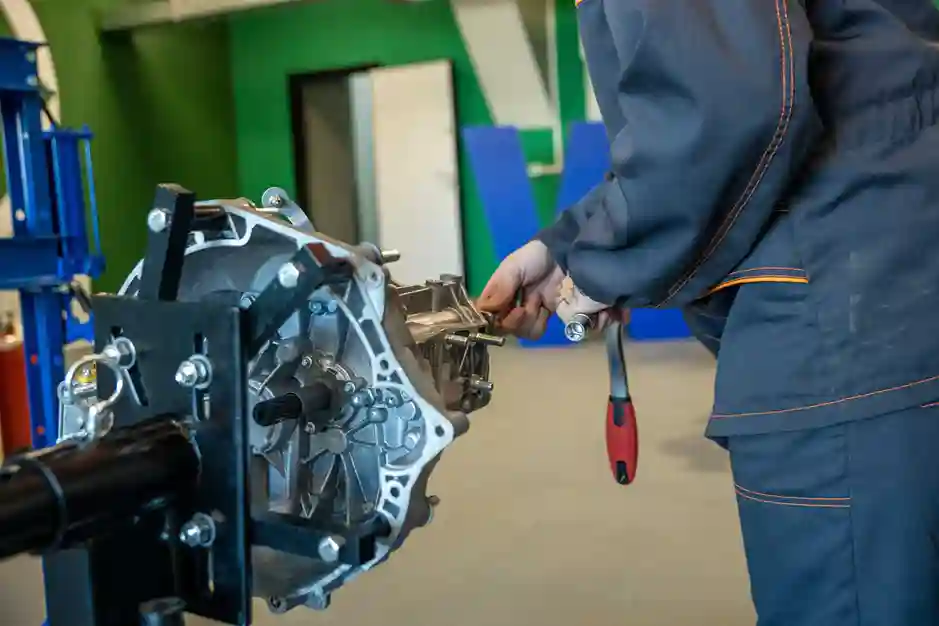
Mercedes transmission repair is essential when your vehicle starts showing signs such as hard shifting, slipping gears, unusual noises, or delayed engagement.
1. Hard or Jerky Gear Changes
One of the most noticeable symptoms is a harsh or jerky shift.
You may feel:
- A sudden jolt when changing gears
- Delayed shifting
- Rough engagement when selecting Drive or Reverse
- Unexpected RPM changes
- Hesitation between gears
A rough shift does not automatically mean the entire transmission needs replacement. A proper diagnostic inspection is necessary to identify the actual cause.

2. Transmission Slipping
Transmission slipping occurs when the engine RPM increases but the vehicle does not accelerate as expected.
For example, you may press the accelerator and notice the engine revving higher while the vehicle responds slowly.
Possible causes can include fluid-related problems, worn internal components, or other transmission faults.
Mercedes-Benz parts documentation lists engine revving during gear changes as one potential sign of transmission trouble.
3. Delayed Engagement
Does your Mercedes take several seconds to move after shifting from Park into Drive or Reverse?
Delayed engagement can indicate a transmission-related problem and should not be ignored, especially if it becomes more frequent.
4. Transmission Fluid Leak
Fluid underneath your vehicle can be an important warning sign.
Depending on the vehicle and fluid condition, transmission fluid may appear reddish, amber, or another shade depending on its age and type.
A leak can result from components such as:
- Seals
- Gaskets
- Transmission pan
- Cooler lines
- Other transmission connections
Low fluid levels can contribute to poor transmission operation and overheating. Mercedes-Benz information specifically identifies transmission-fluid loss as a possible cause of faulty gear shifts.
5. Burning Smell
A burning smell should never be ignored.
Transmission fluid helps lubricate and manage heat within the transmission. Old, contaminated, or insufficient fluid can contribute to overheating and abnormal operation.
If you notice a burning odor together with shifting problems, arrange an inspection as soon as possible.
6. Strange Transmission Noises
A healthy transmission should operate relatively smoothly.
Unusual sounds such as:
- Humming
- Whining
- Clunking
- Grinding
- Buzzing
may indicate a transmission or drivetrain problem.
Mercedes-Benz parts information also lists humming, whining, and clunking among possible warning signs.
7. Check Engine or Transmission Warning
A warning light on your dashboard should not automatically be ignored simply because the vehicle is still driving.
Modern Mercedes-Benz vehicles use electronic control systems that can detect faults affecting transmission operation. Diagnostic scanning can help technicians identify stored fault codes and determine where further inspection is needed.
8. Vehicle Won’t Shift Properly
If your Mercedes refuses to shift into Drive, Reverse, or another gear, the problem requires immediate attention.
Mercedes-Benz owner information advises drivers to consult a qualified workshop when the transmission malfunctions or when a transmission position cannot be selected.
What Causes Mercedes Transmission Problems?
There isn’t one single cause of transmission failure. Several factors can contribute to transmission problems.
Low or Old Transmission Fluid
Transmission fluid is important for lubrication, hydraulic operation, and temperature control. Over time, fluid can deteriorate or become contaminated.
Fluid Leaks
A leak can reduce the amount of fluid available to the transmission. Continuing to drive with a significant leak can increase the risk of additional damage.
Overheating
Excessive heat can negatively affect transmission components and fluid.
Mercedes-Benz documentation specifically warns about transmission overheating and recommends allowing the transmission to cool and having it checked if warning messages remain.
Electrical or Electronic Problems
Modern Mercedes transmissions depend heavily on electronic controls. A sensor, solenoid, wiring issue, or control-system fault can sometimes create symptoms that feel like a mechanical transmission problem.
Normal Wear and Tear
As a vehicle accumulates mileage, internal transmission components can wear. The age, mileage, driving conditions, maintenance history, and specific transmission design all influence longevity.
How Much Does Mercedes Transmission Repair Cost?
One of the most common questions Mercedes owners ask is:
How much will Mercedes transmission repair cost?
There is no single price that applies to every Mercedes-Benz.
The total cost can depend on:
- Mercedes model and year
- Type of transmission
- Exact problem
- Required parts
- Labor time
- Fluid and filter requirements
- Whether the transmission can be repaired
- Whether a component or complete transmission replacement is necessary
- Diagnostic requirements
If the transmission has severe internal damage, transmission replacement may be considered after a proper diagnosis.
For example, a fluid service or leak repair can be very different from an internal transmission rebuild or complete replacement.
Mercedes-Benz’s own parts catalog shows that replacement automatic transmissions can have substantial parts costs, illustrating why a proper diagnosis is important before approving major work.
The best way to determine your repair cost is to diagnose the actual problem first.
At Jankowski Import Auto Inc., the goal should be to identify the source of the problem before recommending unnecessary major repairs.
Transmission Service vs. Transmission Repair
These two terms are sometimes confused. Regular transmission service can help maintain smooth shifting and identify potential problems before they become more expensive repairs.
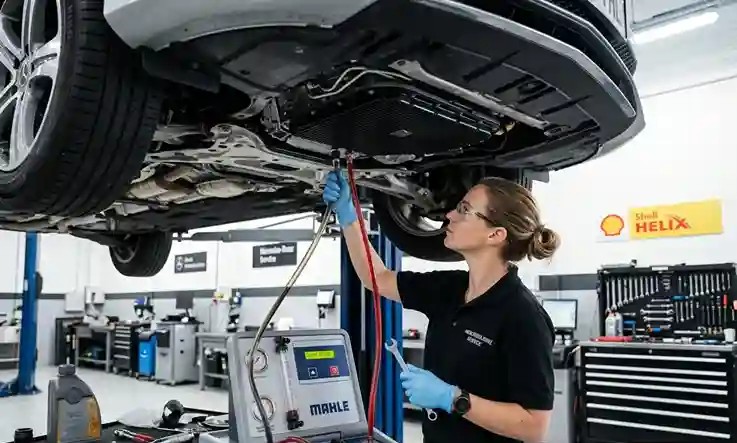
Transmission Service
A service may involve maintenance such as:
- Transmission fluid replacement
- Filter replacement
- Inspection for leaks
- Checking transmission operation
- Inspecting related components
Mercedes-Benz maintenance information includes transmission oil and filter replacement in certain scheduled maintenance plans, depending on the vehicle and service schedule.
Transmission Repair
Repair becomes necessary when a specific fault or damaged component needs to be corrected.
Depending on the diagnosis, this could involve:
- Replacing seals or gaskets
- Repairing a leak
- Replacing a sensor or solenoid
- Addressing valve-body problems
- Repairing internal components
- Rebuilding the transmission
- Replacing the transmission
The correct solution depends on the vehicle and diagnosis.
What to Expect During a Mercedes Transmission Inspection
When you bring your Mercedes in for a transmission concern, a professional diagnostic process can help determine the cause.
Step 1: Discuss the Symptoms
The technician may ask:
- When did the problem start?
- Does it happen when the vehicle is cold or warm?
- Does it happen during acceleration?
- Does it happen when shifting into Reverse or Drive?
- Are there warning lights?
- Have you noticed a leak or unusual smell?
These details can help narrow down the problem.
Step 2: Visual Inspection
The technician may inspect the transmission and surrounding components for signs of:
- Fluid leaks
- Damaged components
- Wiring issues
- Loose connections
- Fluid-condition concerns
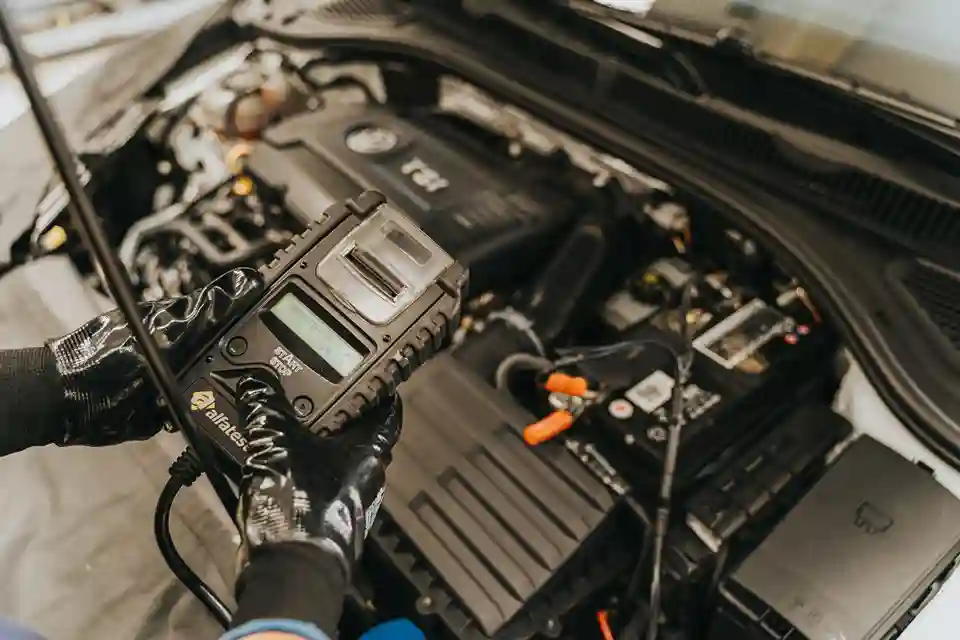
Step 3: Computer Diagnostics
Modern Mercedes vehicles contain sophisticated electronic systems.
Diagnostic equipment can help identify stored fault codes and other information related to transmission operation.
Mercedes-Benz states that trained technicians use diagnostic systems to identify vehicle problems and recommends qualified specialists for transmission faults.
Step 4: Road Test
When appropriate and safe, a technician may drive the vehicle to reproduce the symptoms.
This can help determine when the problem occurs and how the transmission responds under different driving conditions.
Step 5: Repair Recommendation
Once the cause is identified, the technician can explain the recommended repair.
Depending on the diagnosis, the solution may be relatively simple or may require more extensive transmission work.
Can You Still Drive a Mercedes With Transmission Problems?
It depends on the severity of the problem.
If your Mercedes has a minor symptom, it may still be operational, but continuing to drive without diagnosis can potentially make the problem worse.
You should take extra caution if you experience:
- Severe slipping
- Loud grinding
- Major fluid leakage
- Burning smell
- Loss of acceleration
- Inability to select gears
- Transmission warning messages
- Transmission entering emergency/limp mode
Mercedes-Benz owner information recommends stopping safely and seeking professional assistance for certain serious transmission malfunctions.
How to Help Prevent Mercedes Transmission Problems
Regular maintenance can help you identify potential issues before they become major repairs.If a warning light appears, Mercedes-Benz owners can review the official Mercedes-Benz service and maintenance resources for additional information.
Follow the Recommended Service Schedule
Mercedes-Benz recommends following the maintenance schedule appropriate for your specific vehicle. Service requirements can vary by model, engine, transmission, mileage, and driving conditions and you can check your model’s Mercedes-Benz service and warranty manuals for detailed maintenance information.
Check for Leaks
If you notice fluid underneath your Mercedes, don’t simply clean it up and ignore it. Have the source identified.
Pay Attention to Shifting
You know how your vehicle normally feels. If shifting suddenly becomes rough, delayed, or inconsistent, have it inspected. Using the correct parts for your vehicle is important, and Mercedes-Benz provides information about Mercedes-Benz Genuine Parts for proper fit and quality.
Don’t Ignore Warning Lights
Dashboard warnings can provide an early indication that something needs attention.
Use the Correct Parts and Fluids
Mercedes-Benz recommends vehicle-specific maintenance procedures and GenuineParts for its vehicles.
Why Professional Mercedes Transmission Diagnosis Matters
Mercedes-Benz transmissions are complex systems. A symptom such as a rough shift does not necessarily mean that the entire transmission needs to be replaced.

Proper diagnosis can help determine whether the issue is related to fluid, electronics, sensors, solenoids, leaks, or internal components.
Professional transmission repair can help address problems such as slipping, delayed shifting, unusual noises, and other transmission-related issues.
That is why it is important to have transmission problems inspected by technicians who understand European vehicles and Mercedes-Benz systems.
Mercedes Transmission Repair in Your Area
If your Mercedes is experiencing rough shifting, slipping, delayed engagement, strange noises, fluid leaks, or a transmission warning light, don’t wait until the problem becomes more serious.
Jankowski Import Auto Inc. can help Mercedes owners identify the source of transmission concerns and determine the appropriate next step.
Whether your vehicle needs maintenance, diagnostic testing, leak repair, or more extensive transmission work, getting the problem evaluated early can help you make an informed repair decision.
Final Thoughts
Mercedes transmission problems can range from relatively simple maintenance issues to major mechanical failures. The key is recognizing the warning signs and getting the vehicle properly diagnosed.
If you notice hard shifting, slipping, delayed engagement, strange noises, burning smells, fluid leaks, or transmission warning messages, schedule an inspection rather than continuing to ignore the symptoms.
With proper maintenance and timely diagnosis, you can help protect the performance and reliability of your Mercedes-Benz for the miles ahead.
FAQs
How much does it cost to replace a transmission on a Mercedes?
Mercedes transmission replacement can cost several thousand dollars, depending on the model, parts, labor, and type of transmission.
Which Mercedes to stay away from?
There isn’t one Mercedes model that everyone should avoid. Reliability depends on the model year, maintenance, and service history.
What are the first signs of transmission failure?
Common signs include hard shifting, slipping gears, delayed engagement, unusual noises, fluid leaks, and warning lights.
Which car has the worst transmission problems?
There isn’t one car that can reliably be called the worst. Transmission problems vary by model, year, maintenance, and transmission type.
What are the most common signs of Mercedes transmission problems?
Common signs include hard shifting, slipping gears, delayed engagement, strange noises, fluid leaks, and warning lights.
What are common Mercedes transmission problems?
Common issues include transmission fluid leaks, worn components, solenoid problems, electrical faults, and rough or delayed shifting.
How do I know if my Mercedes automatic transmission is failing?
Watch for slipping, jerky gear changes, delayed shifting, unusual noises, burning smells, or difficulty changing gears.
Can a 2022 Mercedes have transmission problems?
Yes. Even newer Mercedes vehicles can develop transmission issues, although the cause and repair requirements vary by model and maintenance history.
Can a 2021 Mercedes have transmission problems?
Yes. Transmission problems can occur in any model year, so unusual shifting, warning lights, or leaks should be professionally inspected.