
Buying a used European car can be an exciting experience. Brands such as BMW, Mercedes-Benz, Audi, Volkswagen, Volvo, and MINI are known for their engineering, comfort, performance, and advanced technology. However, buying a used European vehicle without a proper inspection can also lead to expensive surprises.
European Car Inspection is an essential step when buying a used European car, helping you identify hidden mechanical problems, safety issues, and costly repairs before making your purchase.
A vehicle may look clean on the outside and drive smoothly during a short test drive, while hidden problems may exist underneath. Issues with the engine, transmission, suspension, electronics, cooling system, brakes, or previous accident repairs may not be obvious to an average buyer.
That is why a pre-purchase inspection (PPI) is one of the most important steps before buying a used European car. A professional inspection can help you understand the vehicle’s actual condition and identify repairs that may affect your ownership costs.
This pre-purchase inspection checklist for buying a used European car covers the major areas you should examine before making a purchase.
What Is a Pre-Purchase Inspection?
A pre-purchase inspection is a detailed examination of a used vehicle performed before you buy it. Ideally, the inspection should be completed by an experienced technician who understands the specific European brand you are considering.
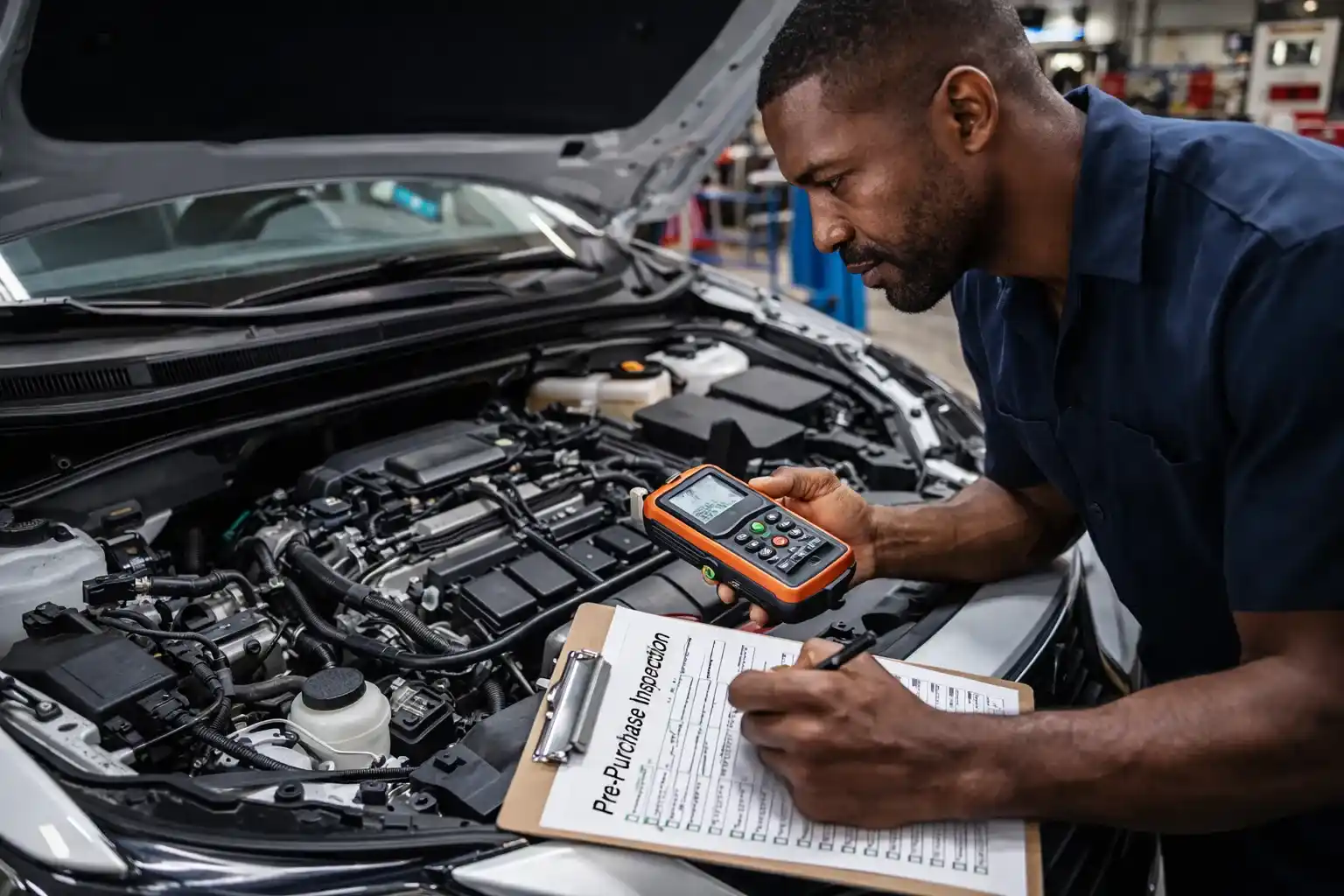
A proper PPI goes beyond checking whether the car starts and drives. The technician should inspect the mechanical systems, electrical components, body condition, undercarriage, diagnostic system, fluids, tires, brakes, and other important components.
The FTC recommends getting a independent mechanic inspection before purchasing a used vehicle, even if the dealer has already inspected it.
The goal is not necessarily to find a perfect vehicle. Almost every used car will have some wear and tear. Instead, the purpose is to identify existing problems, potential future repairs, safety concerns, and maintenance needs so you can make an informed purchasing decision.
Why European Cars Need a Detailed Pre-Purchase Inspection
European vehicles often use sophisticated engineering and advanced electronic systems. This can provide excellent driving performance, but it can also make repairs more complicated when components begin to fail.
For example, a warning light may be caused by a relatively simple issue, while another warning may indicate a more expensive mechanical or electronic problem.
Some European vehicles also have complicated cooling systems, turbocharged engines, advanced suspension systems, electronic parking brakes, sophisticated transmissions, and numerous control modules.
A professional inspection can help identify problems before they become your responsibility.
Pre-Purchase Inspection Checklist for a Used European Car
1. Check the Vehicle History
Before spending money on an inspection, review the vehicle’s history.
Ask the seller for available maintenance records, repair invoices, registration information, and other documentation. A vehicle history report can also provide useful information about reported accidents, ownership history, mileage records, and other events.
Look for signs of:
- Major accidents
- Flood or water damage
- Salvage or rebuilt titles
- Odometer inconsistencies
- Frequent ownership changes
- Long periods without documented maintenance
- Major engine or transmission repairs
- Repeated mechanical problems
A clean-looking car with an unclear history should be inspected carefully.
Remember that a vehicle history report is useful but does not replace a physical inspection. Not every accident, repair, or mechanical problem will appear on a history report.
2. Inspect the Exterior
Start with a detailed visual inspection of the body.

Check each panel under good lighting and compare the color, texture, and alignment of surrounding panels. Differences in paint shade can indicate previous body repairs.
Look for:
- Scratches and dents
- Paint overspray
- Uneven panel gaps
- Mismatched paint
- Rust
- Cracked lights
- Damaged bumpers
- Windshield cracks
- Signs of previous collision repairs
Open the hood, trunk, and doors and inspect the edges and seams. Signs of disturbed bolts, fresh paint, or unusual panel alignment may indicate previous repairs.
A professional technician can use paint-depth measurement equipment to help identify areas that may have been repainted.
3. Examine the Tires and Wheels
Tires can tell you a lot about the condition of a used vehicle.
Check the tread depth and inspect all four tires for uneven wear. Uneven tire wear may indicate alignment problems, worn suspension components, steering issues, or incorrect tire pressure.
Look for:
- Uneven tread wear
- Cracks
- Bulges
- Excessive wear
- Different tire brands
- Damaged wheels
- Bent rims
- Incorrect tire sizes
If the front tires are worn significantly differently from the rear tires, ask why.
European performance vehicles can also be sensitive to tire quality and specifications, so make sure the vehicle has appropriate tires.
4. Inspect the Engine
The engine is one of the most important parts of a pre-purchase inspection.
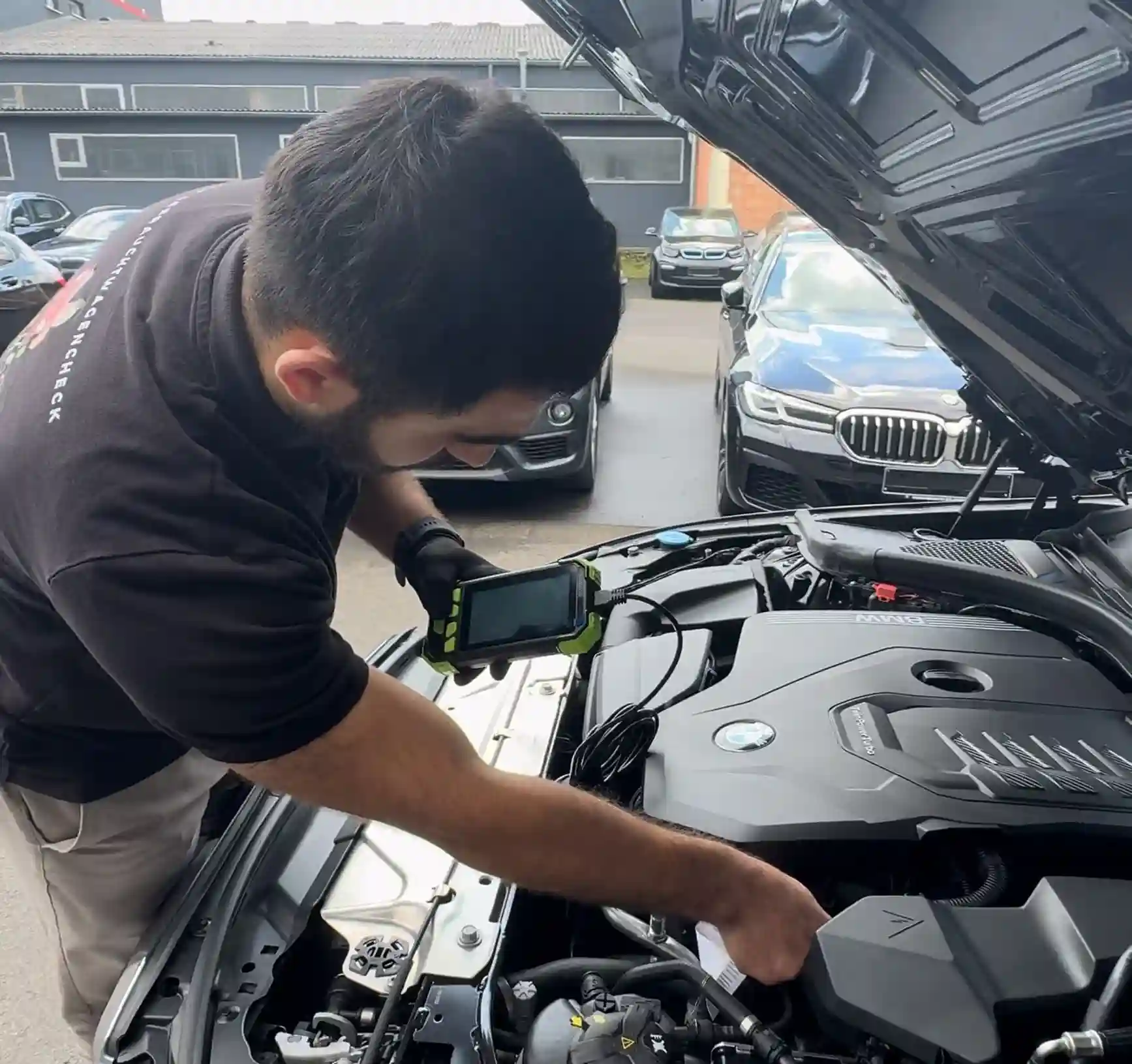
Start with a visual inspection. Look for oil leaks, coolant leaks, damaged hoses, loose connectors, cracked components, and signs of previous repairs.
The technician should also check for:
- Oil leaks
- Coolant leaks
- Vacuum leaks
- Damaged belts
- Worn hoses
- Corrosion
- Unusual noises
- Engine mount problems
- Turbocharger issues
- Signs of overheating
The engine should ideally be inspected both when cold and after reaching normal operating temperature.
Pay attention to unusual sounds during startup. Rattling, knocking, ticking, squealing, or grinding noises can indicate different mechanical problems.
5. Check Engine Oil and Fluids
Fluid conditions can provide important clues about maintenance.
Check the engine oil level and condition. Extremely dirty oil, low oil levels, or signs of contamination may require further investigation.
Other fluids that should be checked include:
- Coolant
- Brake fluid
- Transmission fluid, where applicable
- Power steering fluid, where applicable
- Differential fluid
- Windshield washer fluid
The technician should also inspect for fluid leaks around the engine, transmission, cooling system, and other components.
A small leak may not seem serious, but ignoring it can eventually lead to a larger repair.
6. Inspect the Cooling System
Cooling-system problems can become expensive if they are ignored.
Many modern European cars use complex cooling systems with multiple hoses, pumps, sensors, thermostats, radiators, expansion tanks, and other components.
During the inspection, check for:
- Coolant leaks
- Cracked expansion tanks
- Damaged hoses
- Radiator condition
- Water pump operation
- Thermostat operation
- Cooling fan operation
- Signs of overheating
Check the temperature gauge during the test drive. The engine should normally reach and maintain its expected operating temperature.
If the vehicle has a history of overheating, additional diagnostic testing may be necessary.
7. Inspect the Transmission
Transmission repairs can be extremely expensive, making this an important part of any PPI.
During the test drive, pay attention to how the transmission shifts.
Look for:
- Delayed engagement
- Harsh shifting
- Slipping
- Shuddering
- Unusual noises
- Transmission warning lights
- Difficulty selecting gears
- Fluid leaks
Automatic transmissions should generally shift smoothly under normal driving conditions.
For manual transmissions, check the clutch for excessive wear and make sure gears engage properly.
If the transmission behaves differently when cold compared with when fully warmed up, tell the technician.
8. Check the Suspension System
Suspension components affect ride quality, handling, tire wear, and safety.
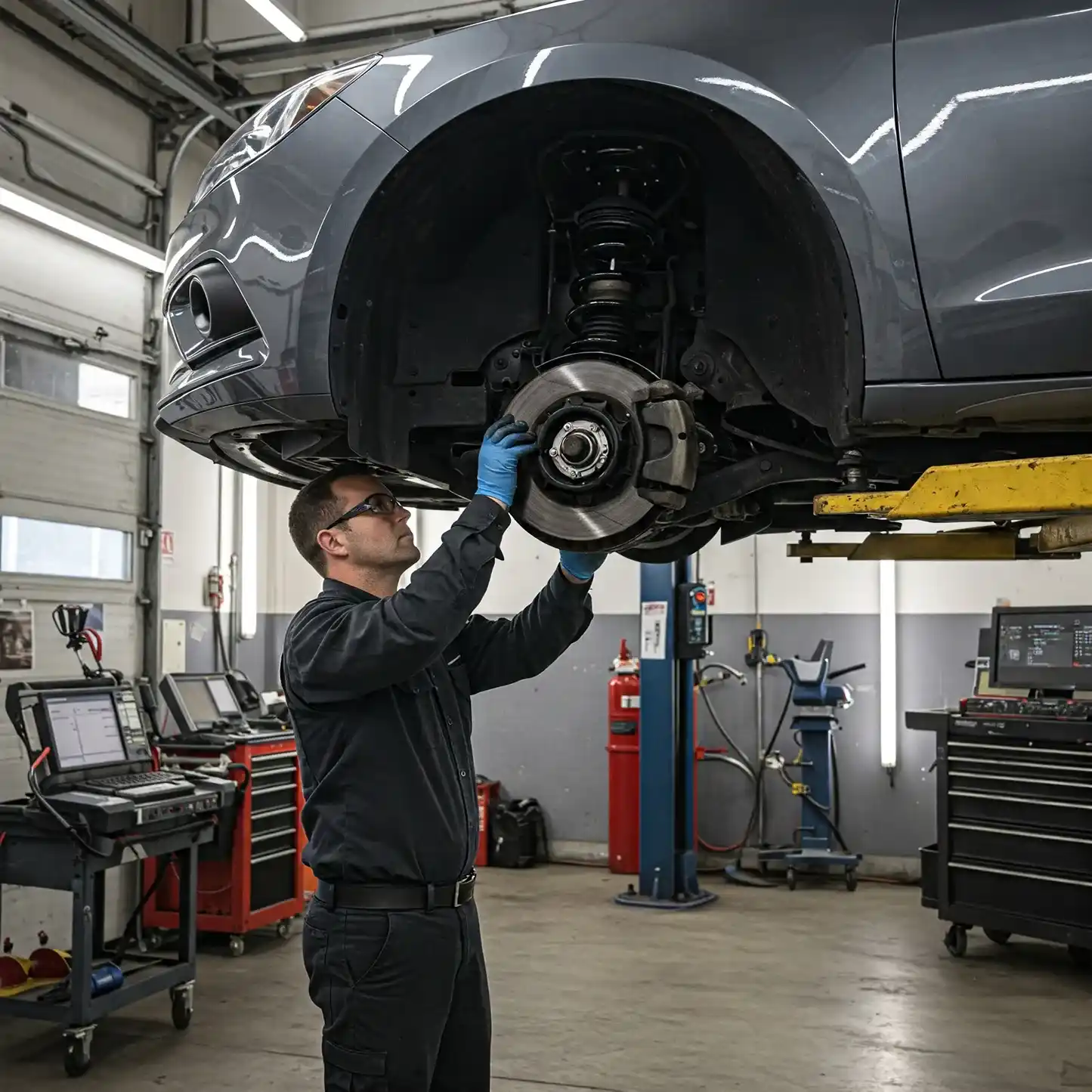
European cars may have conventional suspension, sport suspension, adaptive suspension, or air suspension depending on the model.
Inspect:
- Shock absorbers
- Struts
- Springs
- Control arms
- Bushings
- Ball joints
- Tie rods
- Stabilizer links
- Wheel bearings
- Air suspension components
Look for leaking shocks, cracked bushings, uneven ride height, unusual noises, and excessive movement.
During the test drive, listen for clunks, rattles, squeaks, or knocking sounds when driving over bumps.
9. Inspect the Brakes
Brakes should always receive careful attention.
Check the condition of:
- Brake pads
- Brake rotors
- Brake calipers
- Brake lines
- Parking brake
- Brake fluid
During the test drive, the vehicle should stop smoothly without pulling strongly to one side.
Vibration through the steering wheel or brake pedal during braking may indicate brake or suspension-related problems.
If the brake pads and rotors are close to replacement, include the estimated cost in your ownership budget.
10. Scan the Vehicle’s Computer System
A diagnostic scan is especially important when purchasing a modern European car.
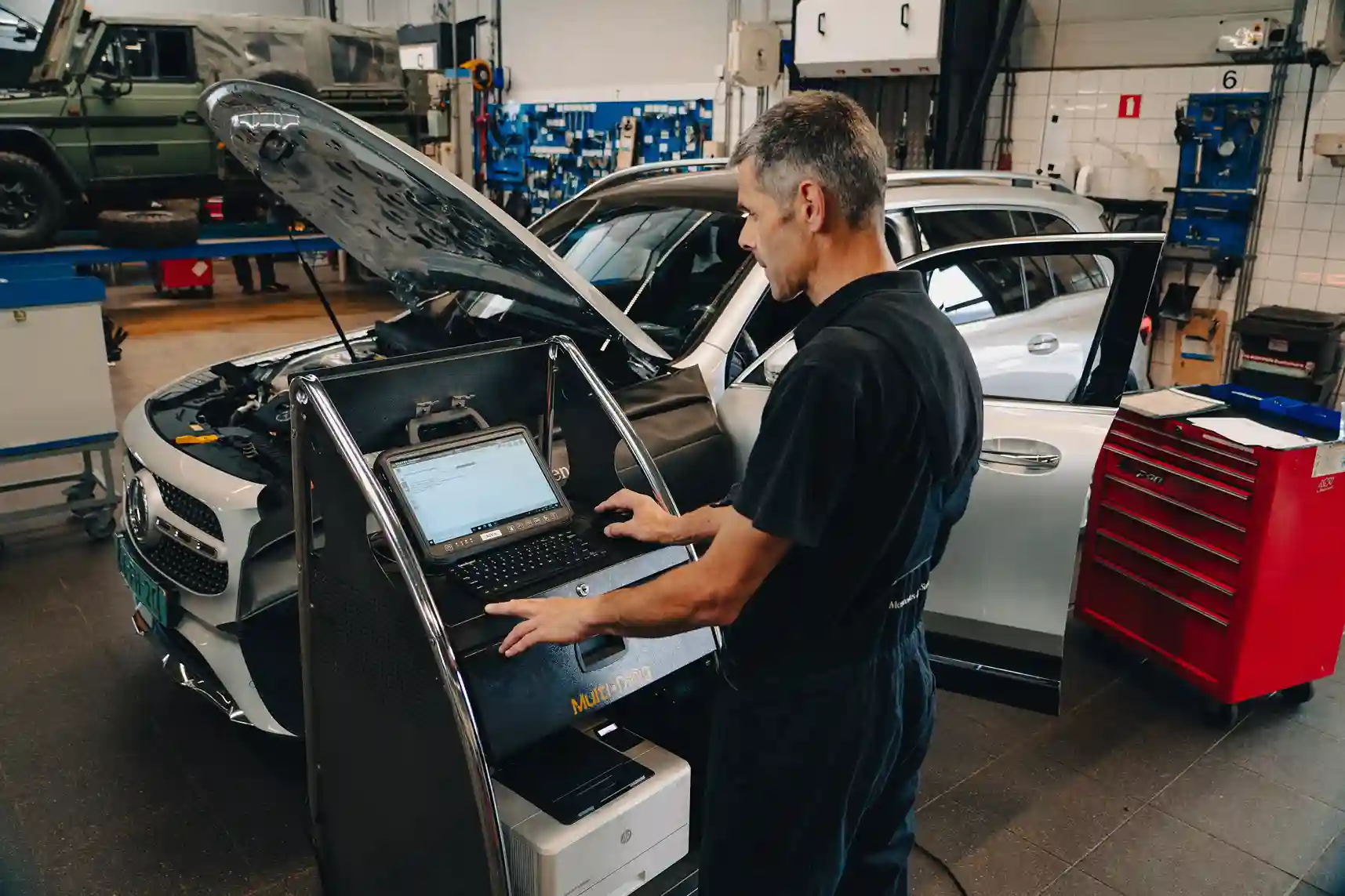
Today’s European vehicles can contain numerous electronic control modules responsible for the engine, transmission, ABS, airbags, body systems, climate control, suspension, and other functions.
A professional scan may reveal:
- Stored fault codes
- Pending fault codes
- Communication errors
- Sensor problems
- Airbag faults
- ABS problems
- Transmission faults
- Emissions-related issues
- Electronic system problems
Even if there are no warning lights on the dashboard, stored diagnostic codes may still be present.
However, diagnostic codes should not automatically be interpreted as proof that a specific component needs replacement. A qualified technician should investigate the underlying cause.
11. Check Dashboard Warning Lights
Turn the ignition on before starting the vehicle and make sure the dashboard warning lights illuminate as expected during the system check.
Before buying a used vehicle, buyers should also check for vehicle safety recalls using the vehicle identification number (VIN).
After starting the engine, many warning lights should turn off.
Pay attention to warning lights related to:
- Check engine
- ABS
- Airbags
- Battery
- Oil pressure
- Tire pressure
- Transmission
- Stability control
- Brake system
A warning light that remains illuminated should be investigated before purchasing the vehicle.
12. Test the Electrical Systems
Electrical problems can be frustrating and expensive to diagnose.
Test as many features as possible, including:
- Headlights
- Turn signals
- Brake lights
- Interior lights
- Power windows
- Power mirrors
- Central locking
- Keyless entry
- Heated seats
- Seat adjustments
- Climate control
- Air conditioning
- Radio
- Navigation
- Backup camera
- Parking sensors
- Sunroof
- Wipers and washers
Do not assume an electrical feature works simply because the dashboard or infotainment screen turns on.
Test each function individually.
13. Inspect the Interior
The interior condition can provide clues about how the vehicle was used.
Check the seats, steering wheel, pedals, switches, dashboard, carpets, and headliner.
Compare the amount of wear with the claimed mileage.
For example, excessive wear on the driver’s seat, steering wheel, and pedals may warrant additional investigation if the vehicle supposedly has very low mileage.
Also check for:
- Water stains
- Musty odors
- Mold
- Damaged carpets
- Broken trim
- Warning messages
- Non-functioning controls
- Signs of smoking
A strong damp or musty smell can sometimes indicate previous water intrusion.
14. Inspect for Water or Flood Damage
Water damage can create long-term electrical and mechanical problems.
Inspect the vehicle carefully for signs of water intrusion.
Look for:
- Damp carpets
- Water stains
- Corrosion around electrical connectors
- Rust under seats
- Unusual odors
- Moisture inside lights
- Corrosion in the trunk
- Damaged electronic modules
Flood-damaged vehicles may initially appear normal but develop electrical problems later.
If there are signs of significant water damage, ask the technician to investigate further before considering the purchase.
15. Check the Undercarriage
A proper inspection should include lifting the vehicle when possible.
The technician can inspect the underside for:
- Oil leaks
- Coolant leaks
- Transmission leaks
- Rust
- Damaged exhaust components
- Suspension damage
- Bent structural components
- Damaged underbody panels
- Brake line corrosion
The underside may reveal problems that are impossible to see during a normal walk-around inspection.
16. Inspect the Exhaust System
Check the exhaust system for leaks, corrosion, damage, and unusual noises.
Pay attention to the exhaust smoke during startup and acceleration.
Different types of smoke can sometimes indicate different problems, although diagnosis requires professional testing.
Also check whether the exhaust system appears modified or damaged.
If emissions components have been removed or modified, the vehicle may have compliance and reliability concerns depending on local regulations.
17. Perform a Thorough Test Drive
A test drive is one of the most valuable parts of the inspection.
Do not drive only around the dealership or seller’s neighborhood. If possible, test the vehicle under different conditions.
Pay attention to:
- Starting behavior
- Acceleration
- Transmission shifting
- Steering response
- Braking
- Suspension noise
- Engine temperature
- Road noise
- Vibrations
- Warning lights
- Cruise control
- Air conditioning
Drive over different road surfaces and listen carefully for unusual noises.
A vehicle that feels smooth on a short drive may still have problems that become noticeable after longer driving.
18. Check Steering and Alignment
The steering wheel should feel stable and responsive.
During the test drive, check whether the car:
- Pulls to one side
- Vibrates at highway speeds
- Has excessive steering play
- Produces clicking or knocking noises
- Has an off-center steering wheel
Alignment problems can result from worn suspension components, damaged wheels, previous accidents, or normal wear.
If the vehicle consistently pulls to one side, have it inspected before purchasing.
19. Review Maintenance Records
Maintenance records can be just as valuable as the physical inspection.
Look for documentation showing regular servicing and major repairs.
Depending on the vehicle, records may include:
- Oil changes
- Brake service
- Cooling-system repairs
- Transmission service
- Spark plug replacement
- Timing-belt service
- Battery replacement
- Suspension repairs
- Tire replacement
- Major scheduled maintenance
A vehicle with consistent maintenance documentation can give you a better understanding of how it was cared for.
If records are missing, ask the seller specific questions about previous maintenance.
20. Ask About Common Problems for That Model
Every vehicle model has its own potential problem areas.
Before buying a used European car, research the specific year, engine, transmission, and trim level.
For example, one engine may have known cooling-system concerns, while another may have different maintenance requirements.
Your technician should understand the vehicle’s common failure points and inspect those components carefully.
This is particularly important for older BMW, Mercedes-Benz, Audi, Volkswagen, Volvo, MINI, and other European models.
How Much Does a Pre-Purchase Inspection Cost?
The cost of a pre-purchase inspection varies depending on the vehicle, inspection depth, location, and repair shop.
A basic inspection may cover the major mechanical and safety components, while a more comprehensive European-car inspection may include advanced diagnostic scanning, underbody inspection, road testing, and additional testing.
Although paying for an inspection adds an upfront expense, it can potentially save you from purchasing a vehicle with thousands of dollars in hidden repair needs.
The exact price should be confirmed with the repair facility before scheduling the inspection.
Can You Inspect a Used European Car Yourself?
You can perform a basic visual inspection yourself, but a professional PPI is strongly recommended before purchasing an expensive used European vehicle.
A buyer can check the exterior, tires, interior, fluid levels, dashboard lights, and basic driving behavior.
However, a professional technician has access to diagnostic equipment and can inspect areas that are difficult for an average buyer to evaluate.
A professional inspection may identify problems that are not obvious during a normal test drive.
What Should You Do If the Inspection Finds Problems?
Finding problems does not automatically mean you should walk away from the vehicle.
The next step is to understand the severity and cost of each issue.
Separate findings into three categories:
Safety-Critical Problems
These should be addressed before driving the vehicle regularly.
Examples include serious brake problems, major steering defects, severe tire damage, or significant structural damage.
Immediate Mechanical Repairs
These may not make the vehicle unsafe immediately but could require attention soon.
Examples include major fluid leaks, worn suspension components, cooling-system problems, or transmission issues.
Normal Wear and Maintenance
Some findings are normal for an older used car.
Examples include worn tires, aging brake pads, minor cosmetic damage, or routine maintenance items.
Ask the technician to explain which repairs are urgent and which can reasonably wait.
Should You Buy a Used European Car Without a PPI?
A pre-purchase inspection is especially valuable when buying a used European vehicle because repair costs can vary significantly depending on the model and condition.
Even if the seller says the vehicle has been “fully inspected,” consider getting an independent inspection from a shop you trust.
The most important word here is independent.
Whenever possible, use a technician who does not have a financial interest in the sale of the vehicle. This can provide a more objective assessment.
Final Pre-Purchase Inspection Checklist
Before purchasing a used European car, make sure you have considered the following:
- Vehicle history
- Accident history
- Exterior condition
- Paint and panel alignment
- Tires and wheels
- Engine condition
- Oil and fluid condition
- Cooling system
- Transmission
- Suspension
- Brakes
- Steering and alignment
- Exhaust system
- Undercarriage
- Electrical systems
- Dashboard warning lights
- Diagnostic scan
- Interior condition
- Water or flood damage
- Test-drive performance
- Maintenance records
- Model-specific common problems
- Estimated upcoming repairs
Final Thoughts
Buying a used European car does not have to be stressful. The key is to understand what you are buying before you sign the paperwork.
A clean appearance and smooth test drive are not enough to determine the true condition of a used BMW, Mercedes-Benz, Audi, Volkswagen, Volvo, MINI, or another European vehicle.
A professional pre-purchase inspection can uncover mechanical, electrical, suspension, brake, cooling, transmission, and diagnostic issues that may otherwise remain hidden.
Before making your final decision, have the vehicle inspected by an experienced European-car technician, review the inspection report carefully, and estimate both immediate and future maintenance costs.
If the inspection reveals problems, use the information to have an informed conversation with the seller. You may be able to negotiate the purchase price, request repairs, or decide that another vehicle better fits your budget.
Most importantly, do not let excitement about a particular car replace careful inspection. Spending a little time and money on a proper PPI before purchasing can help you understand the vehicle’s condition and plan for ownership with greater confidence.
Frequently Asked Questions
Should I get a pre-purchase inspection on a used car?
Yes. A pre-purchase inspection can help identify hidden mechanical, electrical, safety, and maintenance problems before you buy a used vehicle. It is particularly useful for older or higher-mileage European cars.
What is a red flag when buying a used car?
Potential red flags include unexplained warning lights, major fluid leaks, inconsistent maintenance records, accident or flood damage, unusual engine or transmission noises, severe rust, inconsistent mileage information, and sellers who refuse an independent inspection.
How long does a pre-purchase inspection take?
The time varies depending on the vehicle and inspection depth. A basic inspection may take less time, while a comprehensive European-car inspection involving diagnostics and road testing can take longer.
Is a pre-purchase inspection worth the money?
A PPI can be valuable because it may identify expensive repairs before you purchase the vehicle. The inspection cost is usually much smaller than the potential cost of an unexpected major repair.
Can a mechanic inspect a car before I buy it?
Yes. You can arrange for an independent mechanic or European-car specialist to inspect the vehicle before purchasing it. Whenever possible, choose a technician who is experienced with the specific brand and model you are considering.