
Audi vehicles are known for their refined design, strong performance, advanced technology, and comfortable driving experience. However, like any vehicle, an Audi can develop mechanical, electrical, or electronic problems over time. The important thing is recognizing the warning signs before a small issue turns into a larger and more expensive repair.

Modern Audi vehicles use many electronic control modules, sensors, and computer controlled systems. Because of this, a problem may not always be obvious from the outside. A warning light, unusual engine behavior, or electrical issue may be your Audi’s way of telling you that it needs professional attention.
A proper diagnostic check can help identify the source of a problem before unnecessary parts are replaced or the issue becomes more serious. Audi diagnostic service maintenance schedules also include inspections of warning lights and other vehicle systems, making diagnostics an important part of maintaining long term reliability.
If you drive an Audi in Long Beach, CA, here are five common warning signs that it may be time for a professional diagnostic check.
The Check Engine Light Comes On
One of the most common reasons an Audi may need a diagnostic check is an illuminated Check Engine Light.
A Check Engine Light can have different causes, ranging from a simple issue such as a loose fuel cap to problems involving the engine or exhaust system, so professional diagnosis is important.
The Check Engine Light can appear for many different reasons. Sometimes the problem may be relatively minor, while other situations can indicate an issue that needs immediate attention. Possible causes can include problems with sensors, the ignition system, emissions components, fuel delivery, or other engine-related systems.

The important thing to remember is that the warning light itself does not tell you exactly what has failed. A diagnostic scan is needed to retrieve the vehicle’s stored fault information and determine what should be inspected next.
Should You Keep Driving?
It depends on the warning and how the vehicle is behaving.
If the Check Engine Light is on but the Audi is driving normally, you should still arrange a diagnostic inspection rather than ignoring the warning for an extended period.
If the light is flashing or the vehicle is running poorly, losing power, shaking, or showing other serious symptoms, it is safer to stop driving and have the vehicle inspected as soon as possible.
A professional diagnostic check can help determine whether the issue is related to the engine, emissions system, ignition system, sensors, or another electronic component.
At Jankowski Import Auto Inc, advanced diagnostic equipment is used to help identify complex vehicle problems accurately. The goal is to find the underlying issue rather than simply replacing parts based on symptoms.
2. Your Audi Is Losing Power or Running Roughly
Your Audi should provide smooth and consistent performance. If you suddenly notice that the engine feels weaker, hesitates during acceleration, shakes at idle, or does not respond normally when you press the accelerator, it may be time for a diagnostic inspection.
These symptoms can have several possible causes.
For example, rough running or hesitation may be related to:
- Ignition system problems
- Faulty sensors
- Fuel delivery issues
- Air intake problems
- Engine management faults
- Turbocharger related issues
- Electrical or electronic problems
- Problems communicating between vehicle control modules
The exact cause cannot always be identified simply by listening to the engine or looking under the hood.
This is especially important with modern Audi vehicles because multiple systems communicate electronically. A fault in one component can sometimes create symptoms in another part of the vehicle.
Why Early Diagnostics Matter
Ignoring a noticeable change in engine performance can allow the underlying problem to become more complicated.
For example, if your Audi begins hesitating but you continue driving without having it checked, the original issue could potentially affect other components or lead to additional drivability problems.
A diagnostic inspection gives a technician an opportunity to identify fault codes, review system information, perform testing, and determine which component actually needs attention.
If your Audi no longer feels like it normally does, do not assume that the problem will disappear on its own.
3. You Notice Strange Electrical or Electronic Problems
Modern Audi vehicles rely heavily on electronics. From lighting and windows to sensors, control modules, driver assistance features, and infotainment systems, many vehicle functions depend on electronic communication.
That means unusual electrical behavior should not be ignored.
Some warning signs include:
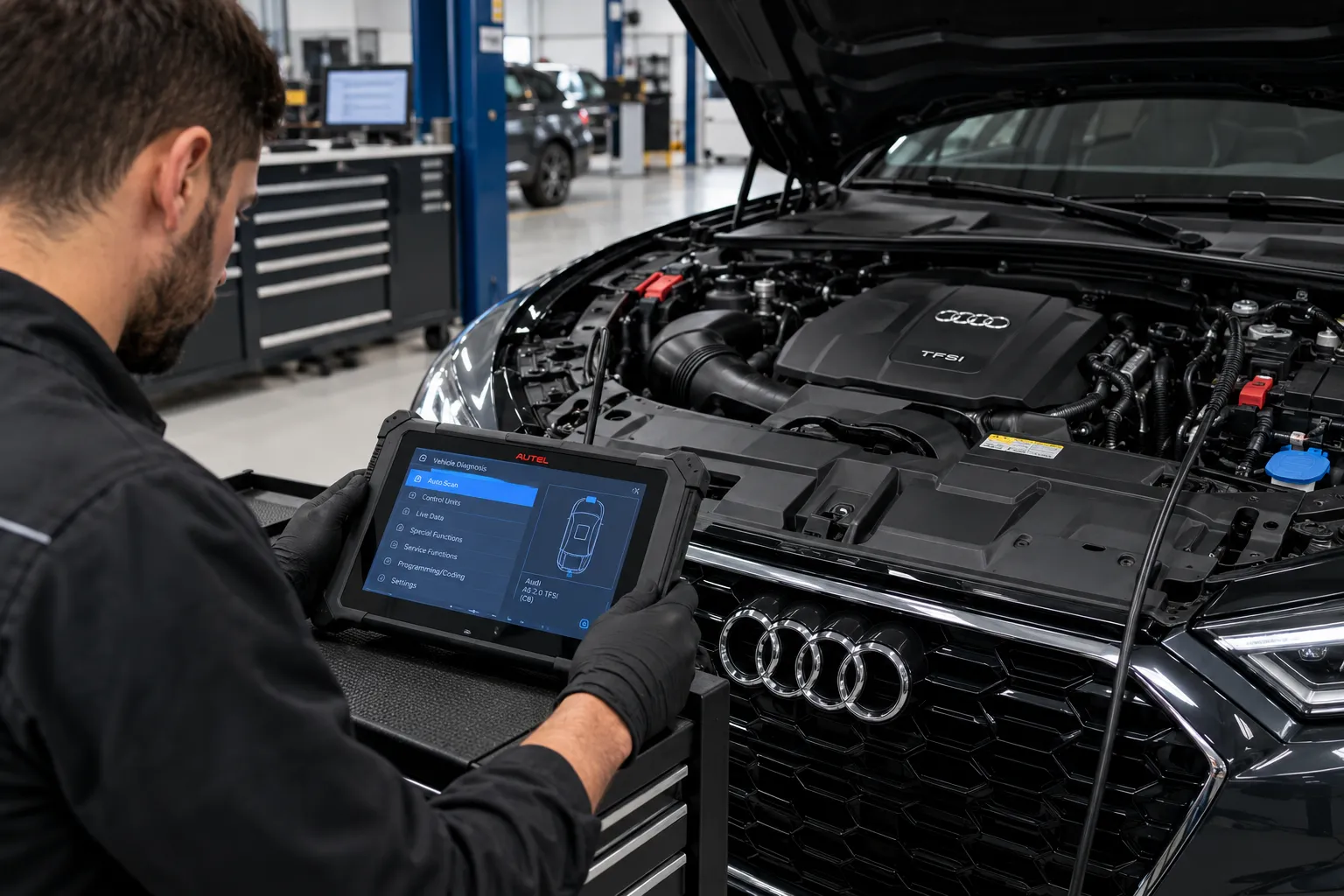
- Dashboard warning messages
- Flickering or unusual lights
- Power windows working intermittently
- Electrical accessories turning on or off unexpectedly
- Battery or charging warnings
- Problems with vehicle electronics
- Multiple warning messages appearing at once
- Driver-assistance systems becoming unavailable
- Intermittent starting problems
An electrical problem may be caused by something as simple as a weak battery, but it can also involve wiring, sensors, modules, charging systems, or software related issues.
Audi technical service information shows that some warning messages can be connected to battery-management or control module issues, which demonstrates why the warning message alone may not provide the complete diagnosis.
Why Audi Electrical Diagnostics Require Experience
Electrical problems can be difficult to diagnose without the correct equipment and technical knowledge.
Replacing a battery or another component without identifying the actual cause may not solve the problem.
A professional diagnostic process can help determine where the fault is located and whether the issue involves the battery, charging system, wiring, sensor, control module, or another electronic component.
Jankowski Import Auto Inc specializes in advanced diagnostics and Audi electrical diagnostics for European and luxury vehicles, including Audi. The shops services include troubleshooting for sensors, modules, wiring systems, charging systems, and other advanced electronic systems.
4. Your Audi Shows a Warning Message or Multiple Warning Lights
Audi itself recommends referring to your vehicle’s warning and indicator lights for current diagnostic information and consulting the owner’s manual for maintenance guidance.
You may see warnings related to systems such as:
- Engine
- Electrical system
- Brakes
- Tire pressure
- Vehicle lighting
- Driver-assistance systems
- Transmission
- Emissions
- Battery or charging system
Some warning messages can be caused by a temporary or software-related issue, while others may indicate a genuine mechanical or electrical fault.
For example, Audi has issued technical information for certain models where instrument-cluster warning messages were related to control-module software issues. This shows why a warning message should be properly diagnosed rather than assuming that the displayed message identifies the failed part.
Audi itself recommends referring to the vehicle’s warning and indicator lights for current diagnostic information and consulting the owner’s manual for maintenance guidance.
Do Not Guess the Problem
One of the biggest mistakes Audi owners can make is assuming they already know what a warning light means.
A warning message may point toward a system, but further testing may be required to determine the actual cause.
Professional diagnostics can provide a clearer picture of what is happening and help a technician decide what needs to be inspected or repaired.
If several warning lights appear at the same time, or if a warning is accompanied by unusual driving behavior, loss of power, overheating, braking problems, or other serious symptoms, have the vehicle inspected promptly.
5. Your Audi Has Unusual Noises, Vibrations, or Driving Behavior
Not every problem starts with a warning light.
Sometimes your Audi will tell you something is wrong through the way it drives.

Pay attention if you notice:
- New or unusual engine noises
- Vibrations while driving
- Hesitation during acceleration
- Rough or unstable idling
- Delayed transmission response
- Unusual shifting
- Reduced acceleration
- Steering or suspension changes
- Strange noises when braking
- Unusual sounds from the engine compartment
These symptoms can come from mechanical components, but modern vehicles can also experience electronic or computer related faults that affect driving behavior.
For example, a transmission may shift differently because of a mechanical problem, fluid related issue, sensor problem, or electronic control issue. Similarly, an engine performance concern may involve mechanical components, sensors, ignition, fuel, or engine-management systems.
A diagnostic inspection helps narrow down the possibilities.
Your Audi Should Not Be ‘Driving Differently’
You know how your Audi normally feels.
If you suddenly notice that it feels different, take that change seriously.
You do not need to wait until the vehicle completely breaks down before having it checked. Early diagnosis can give you a better understanding of the problem and help you make an informed decision about repairs.
What Happens During an Audi Diagnostic Check?
A professional diagnostic check is more than simply plugging a scanner into the vehicle.
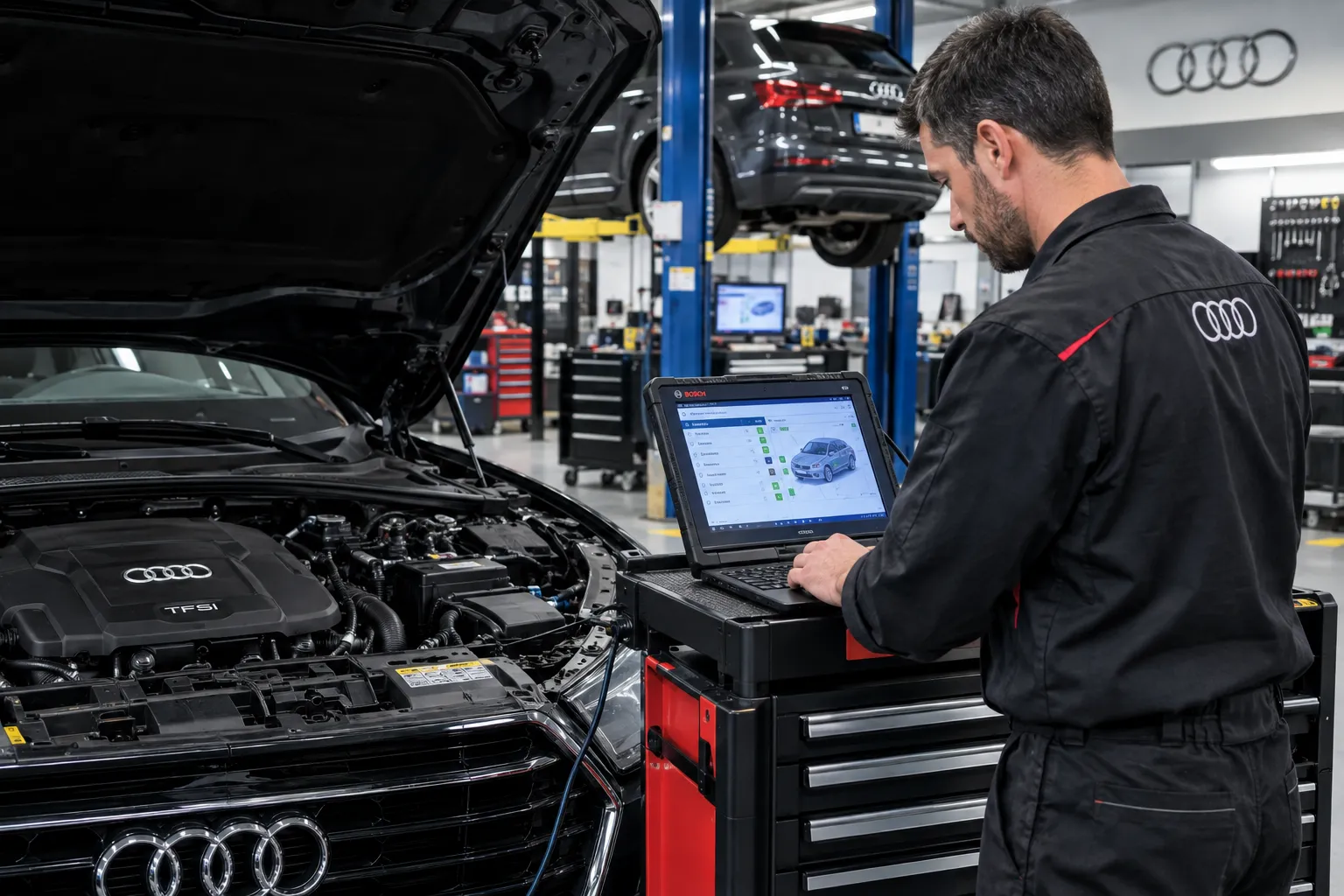
Depending on the symptoms, a technician may:
- Listen to your description of the problem.
- Perform a visual inspection.
- Connect professional diagnostic equipment.
- Check stored fault codes.
- Review vehicle system information.
- Test related components and circuits.
- Inspect wiring, connectors, sensors, or other components when necessary.
- Compare test results with manufacturer information.
- Identify the likely root cause.
- Explain the recommended repair options.
Modern Audi vehicles have multiple control modules and electronic systems, so proper diagnostic testing can be an important part of finding the actual cause of a problem.
The purpose is not simply to find a fault code. The technician should use the available information, testing, and vehicle symptoms to determine what is actually happening.
Why You Should Not Ignore Audi Warning Signs
It can be tempting to ignore a warning light when the car still appears to drive normally.
However, a vehicle can sometimes continue operating even when a problem has already been detected.
Recognizing common car warning signs early can help drivers address developing problems before they become more serious
Delaying a diagnostic check may allow a developing problem to become more difficult or expensive to repair. It can also leave you uncertain about whether your vehicle is safe and reliable for everyday driving.
Regular maintenance and inspections are also important. Audi maintenance schedules include checks of warning and indicator lights, brakes, suspension components, tires, and other vehicle systems.
A diagnostic check is particularly important when a new symptom appears or when your vehicle’s behavior changes unexpectedly.
Audi Diagnostics in Long Beach, CA
If your Audi is showing warning lights, experiencing electrical problems, losing performance, or simply not driving the way it normally does, professional diagnostics can help identify the problem.
At Jankowski Import Auto Inc, we specialize in German and European vehicles, including Audi. Our services include advanced diagnostics, engine diagnostics, electrical system troubleshooting, preventative maintenance, and repair services.
Our technicians use advanced diagnostic technology to help identify complex vehicle problems and provide accurate repair recommendations. We work with European and luxury vehicles and focus on precise service and OEM quality parts.
Whether your Audi needs a simple inspection or more advanced troubleshooting, getting the problem checked early can help you understand what your vehicle needs before a small issue develops into a larger repair.
Schedule an Audi Diagnostic Check Today
Your Audi does not have to stop running before it needs professional attention.
If you notice a warning light, unusual noise, rough engine performance, electrical problems, reduced power, or a change in the way your vehicle drives, consider scheduling a diagnostic inspection.
Early diagnosis can help identify the underlying problem and give you a clearer path toward the right repair.
For professional Audi diagnostic services and European auto repair in Long Beach, CA, contact Jankowski Import Auto Inc to schedule an appointment.
Jankowski Import Auto Inc
2636 E South St
Long Beach, CA 90805
Phone: +1 (323) 895-8755
Professional diagnostic and repair services are available Monday through Saturday, 10:00 AM 6:00 PM.
Final Takeaway
The five warning signs to watch for are:
- Check Engine Light
- Loss of power or rough engine performance
- Unusual electrical or electronic problems
- Warning messages or multiple dashboard lights
- Unusual noises, vibrations, or changes in driving behavior
If your Audi is showing any of these signs, do not rely on guesswork. A professional diagnostic check can help identify the cause and determine what your vehicle needs.
Frequently Asked Questions
How much does Audi charge for a diagnostic test?
The cost of an Audi diagnostic test can vary depending on the vehicle model, the problem, and the level of testing required. A basic scan may be different from advanced diagnostic testing for an engine, electrical, or computer related problem. Contact Jankowski Import Auto Inc. for current diagnostic pricing and service options.
What are 5 dashboard lights that may indicate your Audi needs attention?
Five common warning lights that may require attention include the Check Engine Light, Battery/Charging Light, Brake Warning Light, Tire Pressure Warning Light, and ABS Warning Light. The meaning of a warning light can vary by Audi model, so always check your owner’s manual and have persistent or serious warnings professionally inspected. Audi recommends referring to the vehicle’s warning and indicator lights and owner’s manual for maintenance information.
What is the most common problem with Audi?
There is no single problem that affects every Audi model. Common issues can include electrical and sensor problems, engine performance concerns, oil or fluid leaks, cooling system issues, and warning light related faults. Regular maintenance and timely diagnostic checks can help identify developing problems before they become more serious.
What are the most common Audi warning lights?
Common Audi warning lights include the Check Engine Light, Battery/Charging Light, Brake Warning Light, ABS Light, Tire Pressure Light, and Airbag Warning Light. Some warnings may indicate a minor issue, while others require prompt attention. If a warning light stays on or appears together with unusual driving behavior, a professional diagnostic check can help identify the cause. Audi also recommends using the vehicle’s warning and indicator lights together with the owner’s manual for the most relevant information.