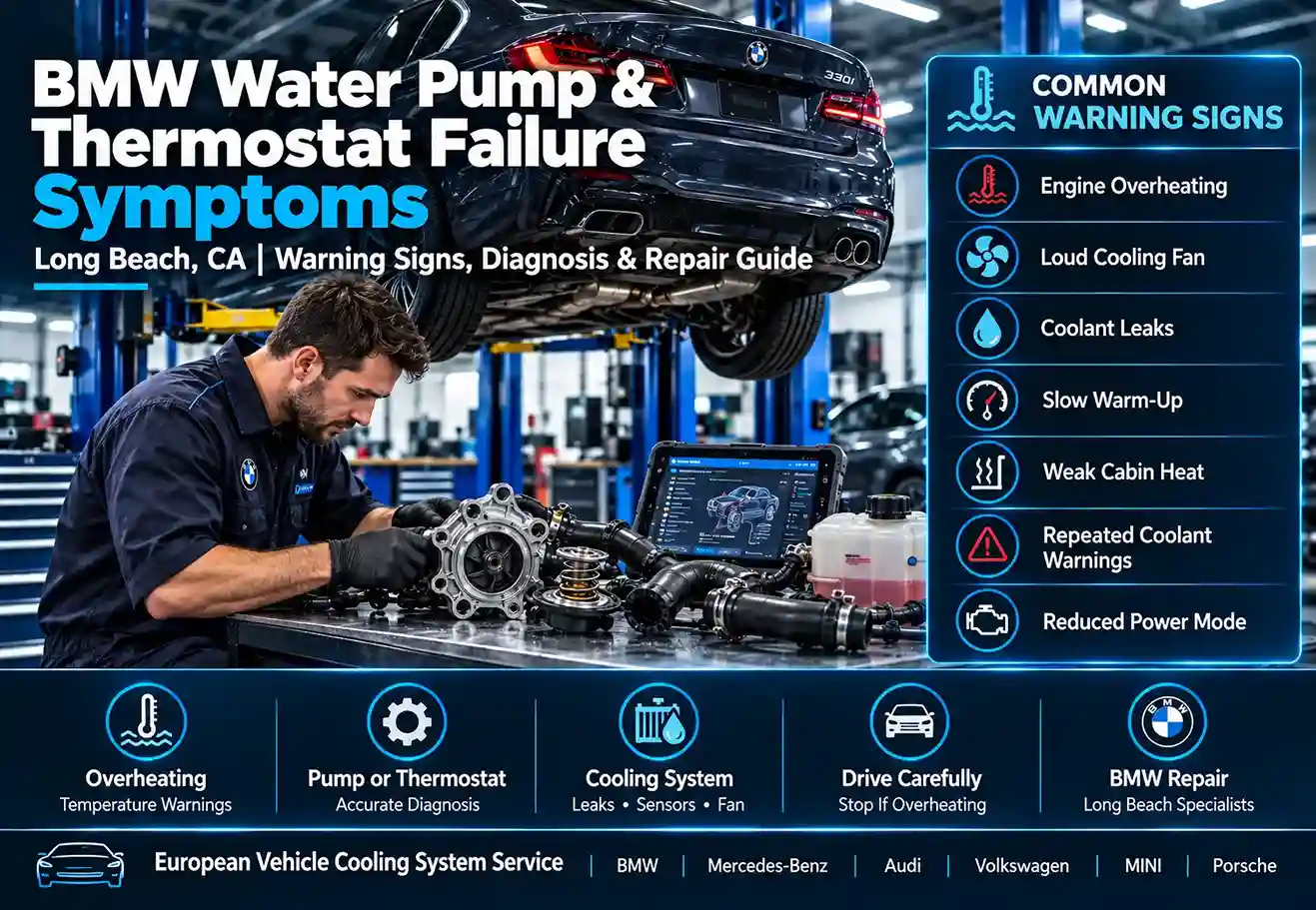
BMW water pump failure can cause serious engine overheating, unexpected warning messages, and expensive repairs if the problem is ignored. The water pump and thermostat work together to control engine temperature, but each component can fail in a different way. Understanding BMW water pump symptoms, thermostat problems, and the diagnostic process can help you recognize trouble early and make a more informed repair decision.
For BMW owners in Long Beach, California, recognizing these problems is particularly important when dealing with daily commuting, stop-and-go traffic, and warm weather. A cooling system that is not working correctly can put unnecessary stress on an engine, even during a relatively short drive.
BMW running hot or showing a coolant warning in Long Beach? Stop driving and call us. We test the water pump, thermostat and cooling system before replacing parts. Call Andrew at (323) 895-8755 or see our BMW repair in Long Beach page.
1. What Does a BMW Water Pump Do?
A water pump circulates coolant through the engine and other parts of the cooling system. As the engine operates, combustion produces heat. Coolant absorbs some of that heat and carries it toward the radiator or other heat exchangers, where it can be released.
Without adequate coolant circulation, heat can build up in the engine. This can affect engine performance, damage seals and gaskets, and potentially lead to severe internal engine damage.
Many BMW models use electronically controlled coolant pumps, although the design depends on the model, engine, and production year. Some vehicles use conventional mechanically driven pumps, while others have more complex cooling arrangements.
An electric water pump can adjust coolant circulation according to the engine’s operating requirements. This gives the engine management system greater control over temperature, but it also means that electrical faults, communication problems, or internal pump failures can affect cooling performance.
A water pump may develop an internal electrical or mechanical fault without producing an obvious puddle beneath the car. That is why a visual inspection alone cannot always confirm whether the pump is working correctly.
2. What Does the BMW Thermostat Do?
The thermostat regulates coolant flow according to engine temperature. When the engine is cold, the thermostat helps it warm up efficiently. As the coolant reaches the appropriate operating temperature, the thermostat opens or adjusts its position to allow more coolant to circulate through the relevant cooling passages and radiator.
BMW thermostats vary by engine design. Some are electronically controlled and work with the engine management system to regulate temperature more precisely.
A thermostat that becomes stuck closed can restrict coolant flow through the radiator and contribute to overheating. A thermostat stuck open can allow excessive cooling during warm-up, causing the engine to take longer to reach its intended operating temperature.
These two faults can create different symptoms. An overheating engine does not automatically mean the thermostat is stuck closed, and a slow-warming engine does not automatically mean the water pump has failed.
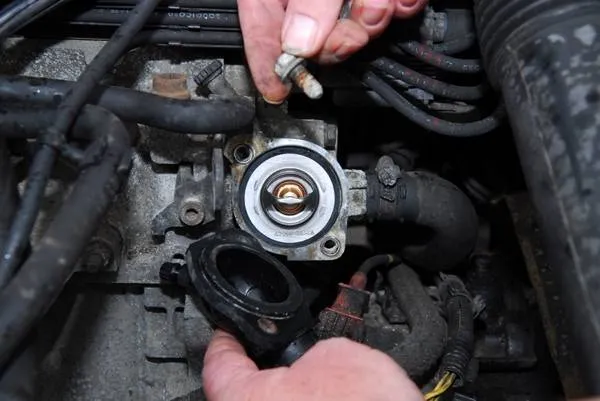
The distinction matters because replacing the wrong component can waste money without correcting the original problem.
3. Seven Signs of BMW Water Pump or Thermostat Failure
Sign 1: The engine temperature rises unexpectedly
A rising engine temperature is one of the most important warnings to take seriously. If coolant circulation becomes inadequate, the engine may accumulate heat faster than the cooling system can remove it.
You might notice a temperature warning, a cooling-system message, or a change in engine behavior. Some BMWs provide a temperature display or warning message rather than a traditional continuously visible temperature gauge.
A failing pump is one possible cause, but low coolant, a thermostat fault, a blocked radiator, an inoperative cooling fan, or trapped air can produce similar problems.
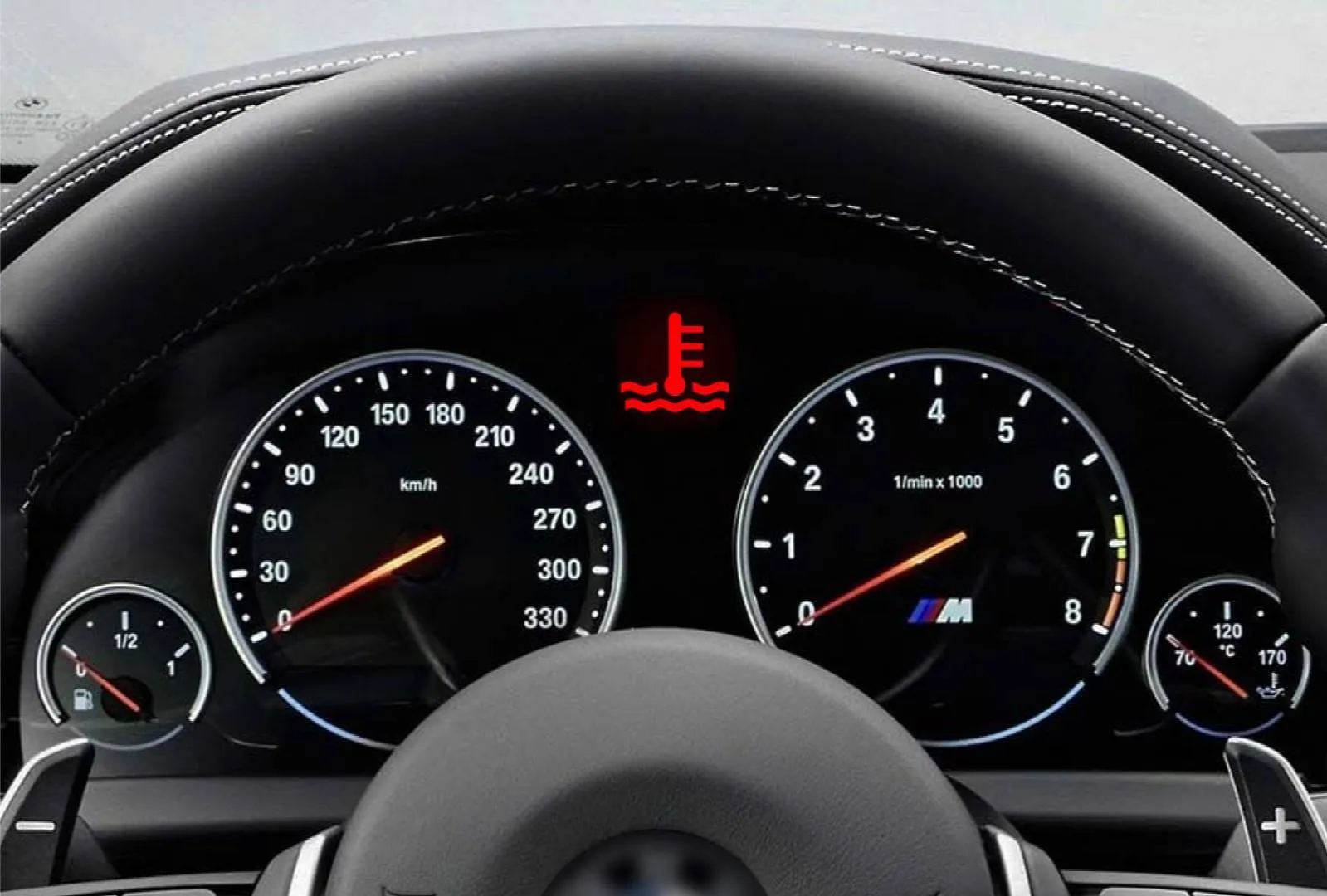
If a red overheating warning appears, pull over somewhere safe, switch off the engine, and follow the instructions in your owner’s manual. Do not continue driving in an attempt to reach your destination.
Sign 2: The cooling fan becomes unusually loud
An electric cooling fan that suddenly runs at high speed can indicate that the vehicle is attempting to manage excessive heat.
On certain BMW models, a water pump or cooling-system fault may cause the fan to operate aggressively. However, a loud fan is not proof that the pump has failed. High coolant temperature, a fan-control fault, air-conditioning demands, or other operating conditions may also explain the behavior.
Pay attention to when the noise occurs. Does it begin immediately after starting the engine? Does it happen after a short drive? Is it accompanied by an overheating warning or reduced engine power?
These details can help a technician narrow down the possible causes.
Sign 3: Coolant is leaking from the engine area
Coolant leaks may appear as colored liquid beneath the vehicle, wet areas around cooling-system connections, or dried residue near a hose, pump, housing, or expansion tank.
BMW coolant color varies by product and specification, so color alone is not a reliable way to identify the correct coolant or confirm the source of a leak.
A leak near the water pump may indicate a damaged seal, housing, connection, or another nearby component. Some deposits around a pump do not necessarily prove that an active leak exists, so the area should be inspected carefully before parts are replaced.
Never open a hot cooling system to investigate a suspected leak. Hot coolant is pressurized and can cause serious burns.
Sign 4: The engine takes too long to warm up
If the engine consistently takes longer than expected to reach its normal operating temperature, a thermostat stuck open is one possible explanation.
The engine may remain cooler than intended, especially during light driving or in cooler conditions. Depending on the vehicle, this can affect fuel efficiency, emissions, and heating performance.
A technician may compare actual coolant-temperature readings with the engine’s expected warm-up behavior. A diagnostic fault such as P0128 can indicate that the engine is taking too long to reach the expected temperature, but the code does not independently prove that the thermostat is defective.
Temperature-sensor accuracy, coolant circulation, operating conditions, and the particular BMW engine must also be considered.
Sign 5: The cabin heater blows cool air unexpectedly
The cabin heating system uses heat from the engine coolant. If the coolant level is low or circulation is disrupted, the heater may deliver weak or inconsistent warmth.
A thermostat problem may also affect the amount of heat available, particularly when the engine struggles to reach its intended operating temperature.
However, cool cabin air can have other causes, including air trapped in the cooling system, a heater-control fault, a blocked heater core, or a blend-door problem.
If the heater suddenly turns cold while the engine temperature rises, treat the combination as a possible cooling-system emergency. Stop safely rather than continuing to drive and hoping the problem will disappear.
Sign 6: Coolant warnings appear repeatedly
A recurring low-coolant message deserves attention even if adding coolant temporarily makes the warning disappear.
Coolant does not normally need to be repeatedly added to a properly sealed system. A recurring warning may indicate a leak, an expansion-tank problem, a faulty level sensor, or another cooling-system issue.
A water pump leak is one possibility, but it should not be assumed without testing.
Repeatedly topping up the system without finding the cause can allow a small problem to become a larger repair. If the level drops again, arrange an inspection and avoid driving if the engine is overheating or the coolant loss is substantial.
Sign 7: The engine loses power or enters a reduced-power mode
Some BMW engine-management systems reduce available power when they detect conditions that could threaten engine reliability.
A cooling-system fault may trigger protective behavior, warning messages, or fault codes. The precise response depends on the engine and vehicle generation.
Reduced power does not identify the water pump as the failed component. Electrical supply problems, temperature-sensor faults, thermostat issues, cooling-fan faults, and other engine-management problems can produce related warnings.
A full diagnostic scan and appropriate physical tests are needed to establish the cause.
4. How to Tell If a BMW Water Pump Is Bad
The most reliable approach combines the driver’s observations with professional diagnostic evidence and physical testing.
Start by confirming the exact BMW model, engine, and production year. Cooling-system designs differ, so the correct test procedure must match the vehicle.
A technician may then:
- Scan the engine control module for relevant stored and current faults.
- Review available coolant-temperature readings and pump-control information.
- Inspect the pump, electrical connector, wiring, coolant hoses, and nearby connections.
- Check the battery and charging system if an electrical supply problem is suspected.
- Test for coolant leaks using an appropriate cooling system pressure-testing procedure.
- Evaluate circulation, thermostat operation, and cooling-fan performance.
- Follow the model-specific service procedure for bleeding or venting the cooling system when necessary.
Some BMW electric pumps can record faults relating to speed deviation, electrical operation, or communication. Those findings can be useful, but codes must be interpreted in context. A damaged wire, blown fuse, poor connection, or power-supply issue may resemble a failed pump.
A technician should also consider whether previous cooling-system work introduced trapped air or whether low coolant has affected circulation.
Replacing a pump solely because the engine overheated is not a complete diagnostic process. The aim is to identify the actual failure and confirm that the repair solves it.
5. How to Tell If a BMW Thermostat Is Bad
Thermostat diagnosis focuses on whether the engine warms up and regulates temperature as expected.
If the thermostat is stuck open, the engine may warm up slowly or remain below its expected operating temperature under certain driving conditions. If it is stuck closed or does not open sufficiently, coolant flow through the radiator may be restricted, increasing the risk of overheating.
An electronically controlled thermostat may also develop an electrical or control fault. In some applications, wiring or connector problems can affect thermostat operation.
A technician may compare coolant-temperature sensor data with expected operating behavior, inspect the thermostat and connector, and check for relevant engine-management faults.
The technician should also verify the coolant level, look for trapped air, and consider whether the temperature sensor itself is reporting accurately.
Do not try to diagnose a thermostat by opening a hot coolant reservoir, removing hoses while the engine is running, or touching hot cooling-system components. These methods can expose you to pressurized coolant and moving parts.
A proper diagnostic scan and controlled testing are safer and more dependable.
6. Why BMW Water Pumps and Thermostats Fail
Normal wear and age
Water pumps contain components that experience repeated thermal and mechanical stress. Seals, bearings, internal electrical components, and other parts can deteriorate over time.
Thermostats also undergo repeated temperature changes and movement. With age, a thermostat may stop regulating coolant flow correctly.
Mileage can help establish maintenance context, but there is no single replacement interval that applies to every BMW. Engine design, driving conditions, maintenance history, and previous repairs all influence service decisions.
Electrical problems
An electric water pump depends on an adequate power supply and sound electrical connections. Damaged wiring, corroded terminals, fuse problems, or communication faults may interfere with pump operation.
A replacement pump will not solve an unresolved electrical fault. Electrical testing should be part of the diagnostic process when the symptoms and fault codes point in that direction.
Coolant leaks and incorrect fluid
Low coolant can interfere with proper heat transfer and circulation. The wrong coolant, contamination, or an incorrect mixture can also create problems for the cooling system.
Use coolant that meets the specification for the particular BMW model and engine. Do not select a product based only on its color or assume that a universal coolant is suitable for every BMW.
BMW technical guidance also emphasizes following the correct filling and bleeding procedure after cooling-system repairs. Electric pumps can be damaged if operated without the required coolant, making correct installation and system preparation important.
Trapped air after repairs
Air trapped in the cooling system can interfere with circulation and produce inconsistent temperature readings or cabin-heating problems.
This can happen when a system is drained and refilled without the correct procedure. Some BMW applications require a specific electronic bleeding or venting routine.
If overheating begins shortly after cooling-system work, the technician should check the quality of the previous repair rather than automatically assuming a new component has failed.
Related component failures
The water pump and thermostat are not the only parts involved in temperature control. Expansion tanks, hoses, radiators, cooling fans, sensors, and electrical controls can also contribute to overheating.
A thorough inspection helps identify related faults and avoids replacing components that are still functioning correctly.
7. Can You Drive a BMW With a Bad Water Pump or Thermostat?
The answer depends on the symptoms, but an engine that is actively overheating should not be driven.
A failed water pump can reduce coolant circulation and allow engine temperatures to rise rapidly. Severe overheating can damage cylinder-head components, gaskets, seals, and other expensive engine parts.
Severe overheating can damage cylinder-head components, gaskets, seals, and other expensive engine parts. Timely engine repair service can help address engine problems before they become more extensive.
If a red temperature warning appears, steam is visible, coolant is escaping rapidly, or the vehicle tells you to stop, pull over safely, switch off the engine, and arrange roadside assistance or towing.
Do not remove the coolant cap while the engine is hot. Wait for the vehicle to cool completely and follow the owner’s manual.
A thermostat that appears to be stuck open may not create the same immediate overheating risk as one that restricts circulation. Nevertheless, prolonged operation outside the intended temperature range can affect efficiency and emissions, and the underlying problem should be diagnosed promptly.
If the engine is running abnormally or warning messages are appearing, do not rely on a short trip being safe. When in doubt, towing is the safer option.
8. BMW Water Pump and Thermostat Replacement Cost
The cost of repairing a BMW cooling-system problem depends on the model, engine, parts required, labor time, and whether related faults are discovered.
A straightforward thermostat replacement can cost less than a repair involving a difficult-to-access electric water pump, but some BMW engines require substantial disassembly for either component.
The final estimate may include:
- Diagnostic labor to identify the failure.
- A replacement water pump or thermostat.
- Required seals, gaskets, fasteners, or related parts.
- BMW-compatible coolant.
- Labor for removal, installation, refilling, and bleeding.
- Post-repair testing to verify correct operation.
As a broad planning estimate in the US, some BMW water pump and thermostat repairs may fall in the several-hundred-dollar to $1,500-or-more range. Certain engines, complex installations, additional leaks, or related damage can push the cost higher. This is an illustrative range, not a current quote for every BMW model.
Ask the repair shop for a written estimate that separates diagnostic charges, parts, labor, and any recommended additional work.
It is also worth asking whether the pump and thermostat should be replaced together. On some BMW engines, replacing both during the same repair can make sense because they are related components and labor may overlap. On other vehicles, the diagnosis and service requirements may support replacing only the defective component.
The right decision should be based on the engine design, the condition of each part, the manufacturer’s service information, and the cost of repeat labor—not on a blanket rule that every BMW must receive both parts.
9. Should You Replace the Water Pump and Thermostat Together?
Replacing both components at the same time can be practical when the thermostat is showing signs of failure, both parts have substantial service history, or accessing the second component later would require repeating much of the same labor.
However, replacing the thermostat automatically whenever a water pump fails is not always necessary. Likewise, a thermostat fault does not mean the pump is defective.
Consider these factors before approving the work:
Vehicle-specific repair procedure: Some engines have closely integrated pump and thermostat arrangements, while others do not.
Current diagnostic evidence: Fault codes, temperature behavior, leak testing, and inspection results should support the recommended repair.
Access and labor overlap: If one repair provides convenient access to the other component, combined replacement may reduce future labor costs.
Part quality and warranty: Ask about the parts being installed and the coverage offered for parts and labor.
Condition of the surrounding system: Hoses, connectors, coolant reservoirs, and other related components should be inspected without automatically replacing everything.
A good repair recommendation explains why each part is needed. It should also distinguish necessary repairs from optional preventive maintenance.
10. How a BMW Cooling-System Diagnostic Should Work
A professional inspection should establish why the cooling system is not performing correctly before replacement parts are ordered.
First, the technician reviews the symptoms, including when the warning appeared, whether coolant has been added, and whether recent repairs have taken place.
Next, a diagnostic scan checks relevant engine-control faults and available temperature or pump data. The results help determine which tests are appropriate for the particular engine.
The technician then inspects the cooling system for leaks, damaged connectors, loose hoses, contamination, and other visible problems. Depending on the findings, additional pressure testing, electrical checks, or controlled operating tests may be needed.
After the fault is identified, the repair should follow the correct service procedure. The cooling system must be filled with the specified coolant and bled or vented according to the vehicle’s requirements.
Finally, the technician verifies the repair. That can include checking for leaks, confirming appropriate temperature behavior, reviewing fault information, and ensuring that the original complaint has been resolved.
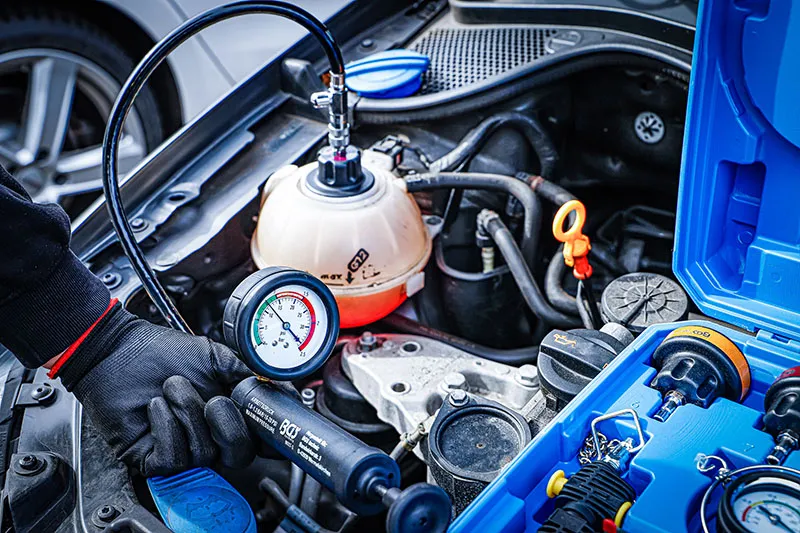
This process is more useful than replacing parts based on a single dashboard warning. It reduces guesswork and helps prevent the same problem from returning.
11. How to Reduce the Risk of Future Cooling-System Problems
Although no maintenance routine can guarantee that a water pump or thermostat will never fail, a few habits can help identify problems earlier.
Check the coolant level according to the owner’s manual and only when the engine is cool. If the level repeatedly drops, investigate the cause rather than continually topping it up.
Pay attention to temperature warnings, changes in cabin heating, unusual fan behavior, and visible coolant residue. These signs are worth investigating before they develop into a more serious issue.
Regular general repairs and maintenance can help identify potential vehicle problems before they develop into more serious issues.
Use the correct coolant specification and have the system serviced according to the requirements for your particular BMW. After any cooling-system repair, confirm that the system has been filled and bled correctly.
Keep records of previous pump, thermostat, radiator, hose, and coolant-related work. Service history can help a technician identify recurring problems and make a better-informed recommendation.
Finally, do not assume that every overheating event means the pump needs replacement. Accurate diagnosis remains one of the most effective ways to avoid unnecessary repair costs.
12. When Should You Contact a BMW Repair Specialist?
Contact a qualified repair shop if your BMW repeatedly displays coolant warnings, takes unusually long to warm up, develops unexplained coolant loss, or shows inconsistent temperature behavior.
Seek immediate assistance if the engine overheats, a red warning appears, steam escapes, or coolant is leaking heavily. Continuing to drive can turn a cooling-system repair into a much more expensive engine repair.
For BMW owners in Long Beach, a specialist familiar with European vehicles can help distinguish pump failure from thermostat, wiring, sensor, coolant-leak, and circulation problems.
Jankowski Import Auto Inc. is a relevant starting point for BMW service inquiries. Visit Jankowski Import Auto Inc. to learn about the shop and contact the team regarding your vehicle’s symptoms and diagnostic needs.
Before booking, provide the BMW’s model, year, engine if known, warning messages, and any recent cooling-system repairs. These details help the shop understand the complaint and determine the next diagnostic steps.
Need help with your car? Our technicians in Long Beach, CA offer professional engine repair service for BMW, Mercedes-Benz, Audi, Volkswagen and other European vehicles. Book an appointment or contact us if you have questions.
Frequently Asked Questions
1. What are the first signs of BMW water pump failure?
Early signs can include an engine-temperature warning, unusually loud cooling-fan operation, intermittent overheating, reduced engine power, or relevant diagnostic faults. Some pumps fail without an obvious coolant leak, so testing is important.
2. How can you tell if a BMW thermostat is bad?
A faulty thermostat may cause slow engine warm-up, a temperature that remains below the expected range, or overheating if coolant flow is restricted. A diagnostic scan and temperature checks help distinguish thermostat problems from sensor, pump, and circulation faults.
3. Can a bad BMW water pump cause overheating?
Yes. If the pump cannot circulate coolant adequately, engine heat may build up quickly. If an overheating warning appears, stop safely and switch off the engine rather than continuing to drive.
4. Should I replace the BMW water pump and thermostat together?
Sometimes. Combined replacement may make sense when labor overlaps, the components are closely integrated, or diagnostic findings support replacing both. The decision depends on the BMW’s engine and the condition of each component.
5. How much does BMW water pump replacement cost?
Costs vary with the model, engine, parts, and labor. Some repairs may cost several hundred dollars, while more involved jobs can exceed $1,500, particularly if additional parts or repairs are needed. Request a vehicle-specific estimate before authorizing the work.
6. Can I drive with a BMW thermostat failure?
A thermostat stuck open may cause slow warm-up and inefficient operation, but a thermostat that restricts coolant circulation can cause overheating. If the engine temperature rises abnormally or a stop warning appears, do not continue driving.
7. Does every BMW use an electric water pump?
No. Pump designs vary by engine and model year. Confirm the vehicle’s engine configuration before applying a repair procedure or ordering replacement parts.
Final Thoughts
BMW water pump and thermostat problems can produce similar symptoms, but they are not interchangeable diagnoses. A pump may fail electrically or mechanically, while a thermostat may stop regulating coolant flow correctly. Leaks, wiring faults, trapped air, and sensor problems can also affect engine temperature.
Recognizing warning signs early, avoiding driving an overheating vehicle, and arranging proper diagnostic testing can help protect your engine and control repair costs.
If your BMW is showing cooling-system warnings or losing coolant, investigate the cause rather than relying on repeated top-ups or replacing parts without evidence. The most effective repair is the one that identifies the actual fault, follows the correct BMW service procedure, and verifies that the cooling system is operating properly afterward.